


NASA is gearing up for one of its most ambitious and complex robotic missions ever attempted – the Mars Sample Return campaign. This multi-mission effort, conducted in partnership with the European Space Agency (ESA), aims to retrieve scientifically-selected rock samples from Mars and deliver them to Earth for intensive study by the early 2030s.
The potential to discover evidence of ancient life on the Red Planet has inspired decades of Mars exploration. But as the National Academies have emphasized across three consecutive Decadal Surveys, certain key questions can only be definitively answered by analyzing Martian samples with the full capabilities of laboratories on Earth.
An Unprecedented Engineering Challenge
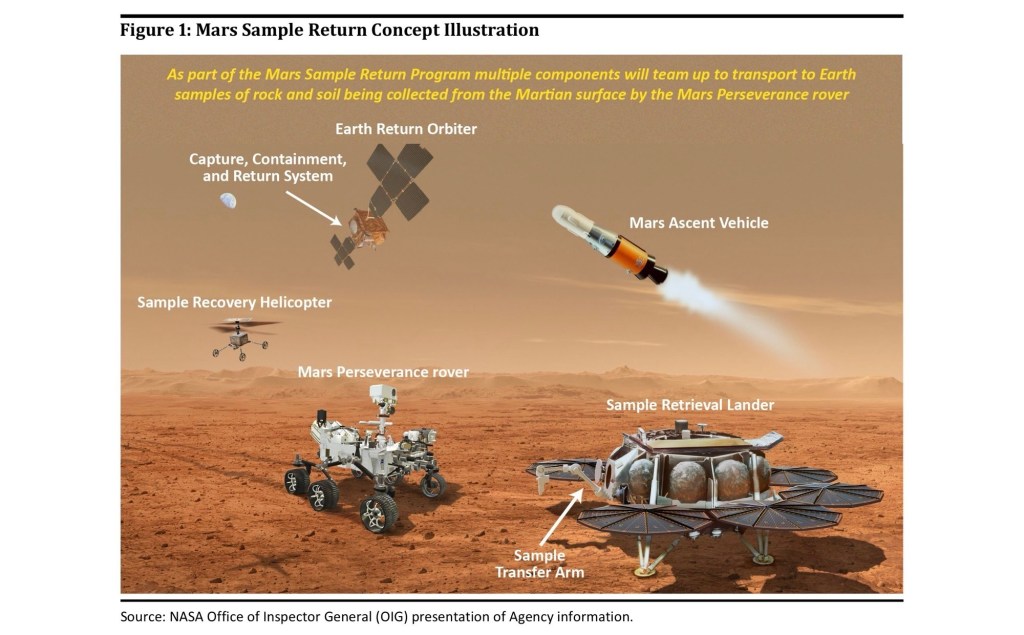
All aspects of the Mars Sample Return architecture make it an unprecedented challenge, even compared to other flagship planetary missions. As the concept illustration shows, it involves a choreographed dance of multiple spacecraft around Mars:
- NASA’s Perseverance rover, already on Mars, is collecting and caching rock core samples in specialized tubes.
- The Sample Retrieval Lander will launch in 2028, land near Perseverance, and transfer the tubes to a Mars Ascent Vehicle – the first ever rocket designed to launch from another planet.
- After launching into Martian orbit, the sample container will be captured by ESA’s Earth Return Orbiter, equipped with NASA’s Capture, Containment, and Return System.
- This system will seal the container in a secondary containment module and load it into an Earth Entry Vehicle for the return trip, ensuring strict planetary protection.
Other key firsts include the partially autonomous rendezvous and capture in Mars orbit, the most powerful electric propulsion system ever used, and the largest spacecraft ever sent into Mars orbit.
Why Bring Samples to Earth?
While spacecraft instruments are highly advanced, they are still vastly outmatched by the full analytical capabilities available in laboratories on Earth. As Jeffrey Johnson of the Johns Hopkins Applied Physics Lab explains, “Many Martian science objectives can only be achieved by analyzing returned samples…The sophisticated instruments at such facilities can detect subtle chemical, mineralogical, and morphological signatures with greater precision and accuracy than is possible with miniaturized robotic instruments.”
Certain crucial measurements, like precisely dating rock formations or detecting potential biosignatures, require sample preparation techniques that cannot be miniaturized for space missions. And once on Earth, the same samples can be re-analyzed for decades using new techniques as they are developed.
Pamela Conrad, an assistant professor at the University of Florida, sums it up: “It’s not that we can’t miniaturize and flight-harden one instrument, it’s that we can’t do it for all the instruments and analyses that we’d be able to perform on these rocks once they’re back on Earth.”
Balancing Risks and Rewards

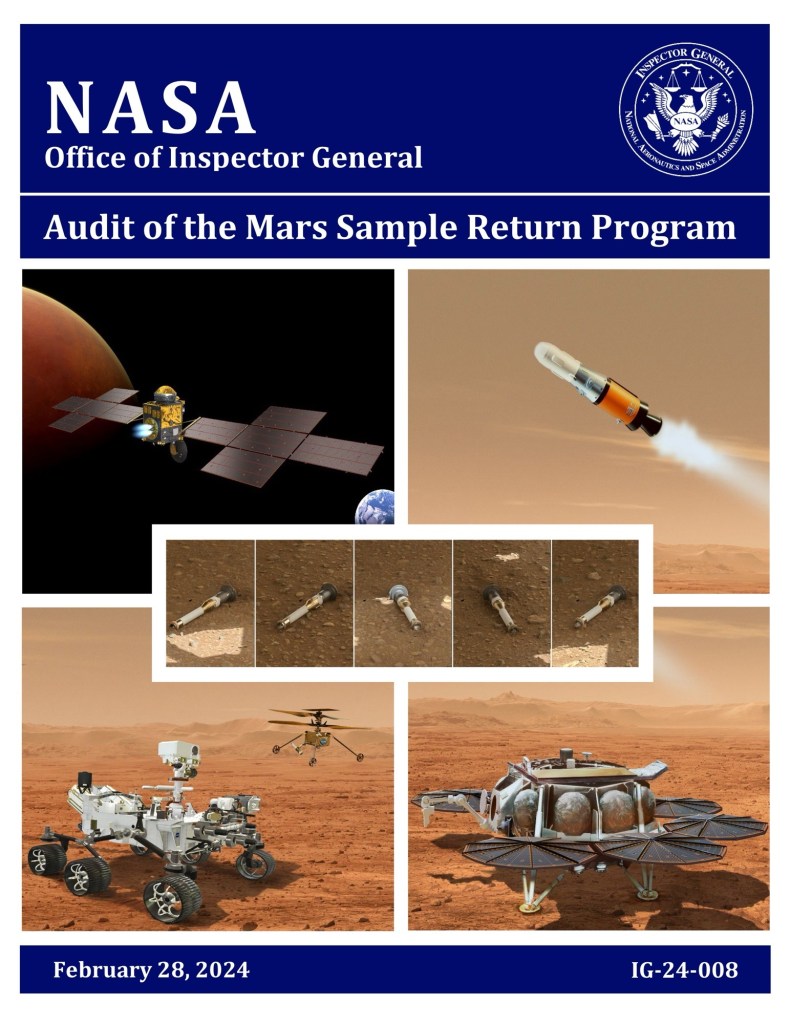
The report from NASA’s Office of Inspector General highlights the immense complexity and risks facing Mars Sample Return. Design issues with the Capture, Containment, and Return System have already led to delays and cost growth from $6.2 billion to an unofficial $7.4 billion estimate.
Coordinating with ESA on aspects like schedule transparency and payload allocations is an ongoing challenge. And the report recommends NASA thoroughly evaluate alternative architectures, including potential later launch dates that could further increase costs into the $8-11 billion range.
At the same time, the science value of securing carefully selected samples from an ancient river delta and lakebed environment on Mars is immense. As NASA science chief Nicola Fox states, “Returning samples will revolutionize our understanding of Mars by bringing scientifically selected samples to Earth for study using the most sophisticated instrumentation around the world.”
The samples could preserve biosignatures from a past era when Mars had liquid water on its surface – potential evidence of life’s origins and possibilities beyond Earth. They would enable cutting-edge research for generations, with each new technology providing an opportunity to reexamine the priceless specimens.
A Critical Juncture
As NASA’s Inspector General emphasizes, the agency must carefully weigh the risks, costs, and potential delays of Mars Sample Return against the unmatched scientific rewards and implications for America’s leadership in planetary exploration.
With the program approaching its next major decision point in 2024, NASA will need to establish a stable design, realistic cost, and launch scenario that balances the interests of stakeholders across the scientific community, international partners, the White House, and Congress.
The path forward is unlikely to be easy, but few endeavors in space exploration have promised such a profound increase in our understanding of Mars and the potential for life elsewhere in the cosmos. If successful, Mars Sample Return could open an era of interplanetary sample return missions – and move humanity closer to the dream of one day seeing new footprints on the Red Planet.


