


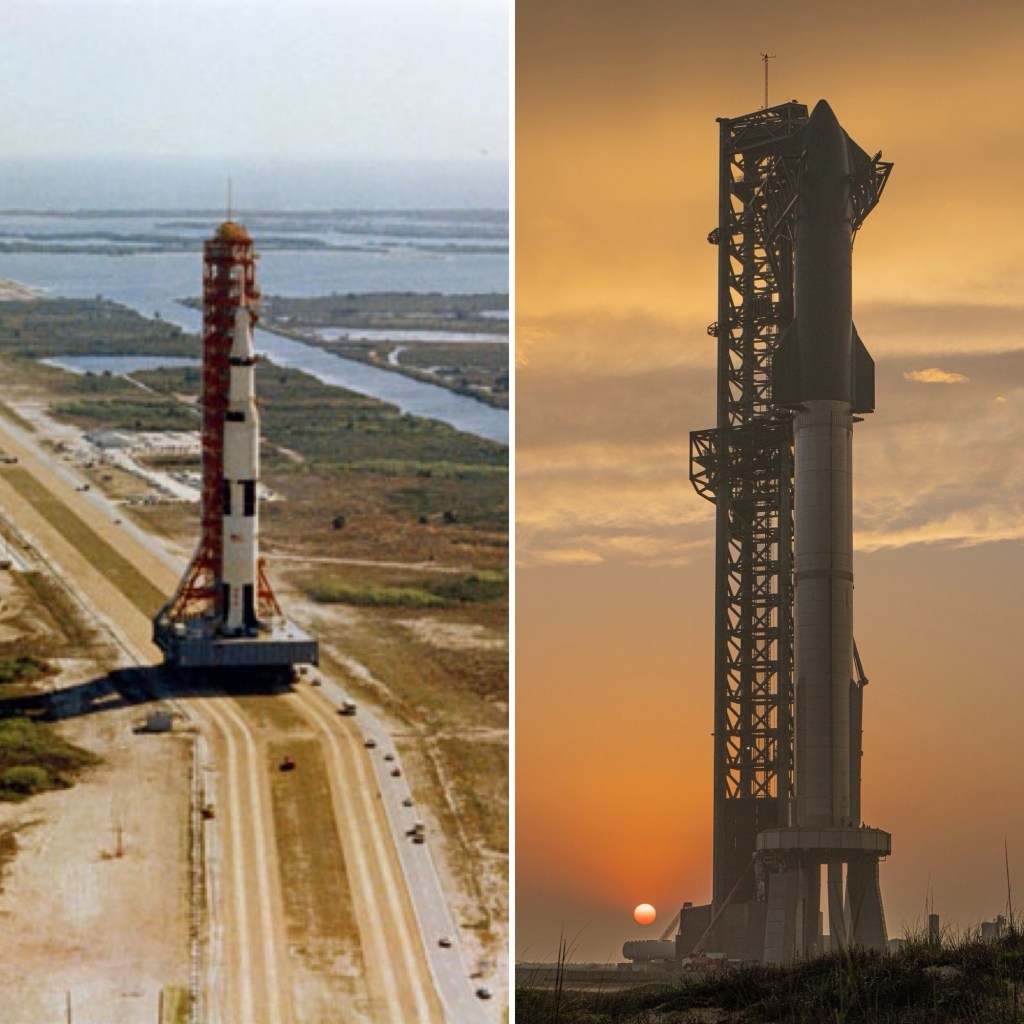
In the annals of spaceflight history, two rockets stand tall above the rest – the Saturn V, which carried humans to the Moon during the Apollo era, and the SpaceX Starship, poised to enable a new age of lunar exploration and interplanetary travel. While separated by over half a century of technological progress, these behemoths share the common goal of pushing the boundaries of human spaceflight. This article reviews the design, capabilities, and missions of these remarkable vehicles, examining their similarities, differences, and the eras they define.
The Saturn V: An Apollo Era Icon


Design and Specifications
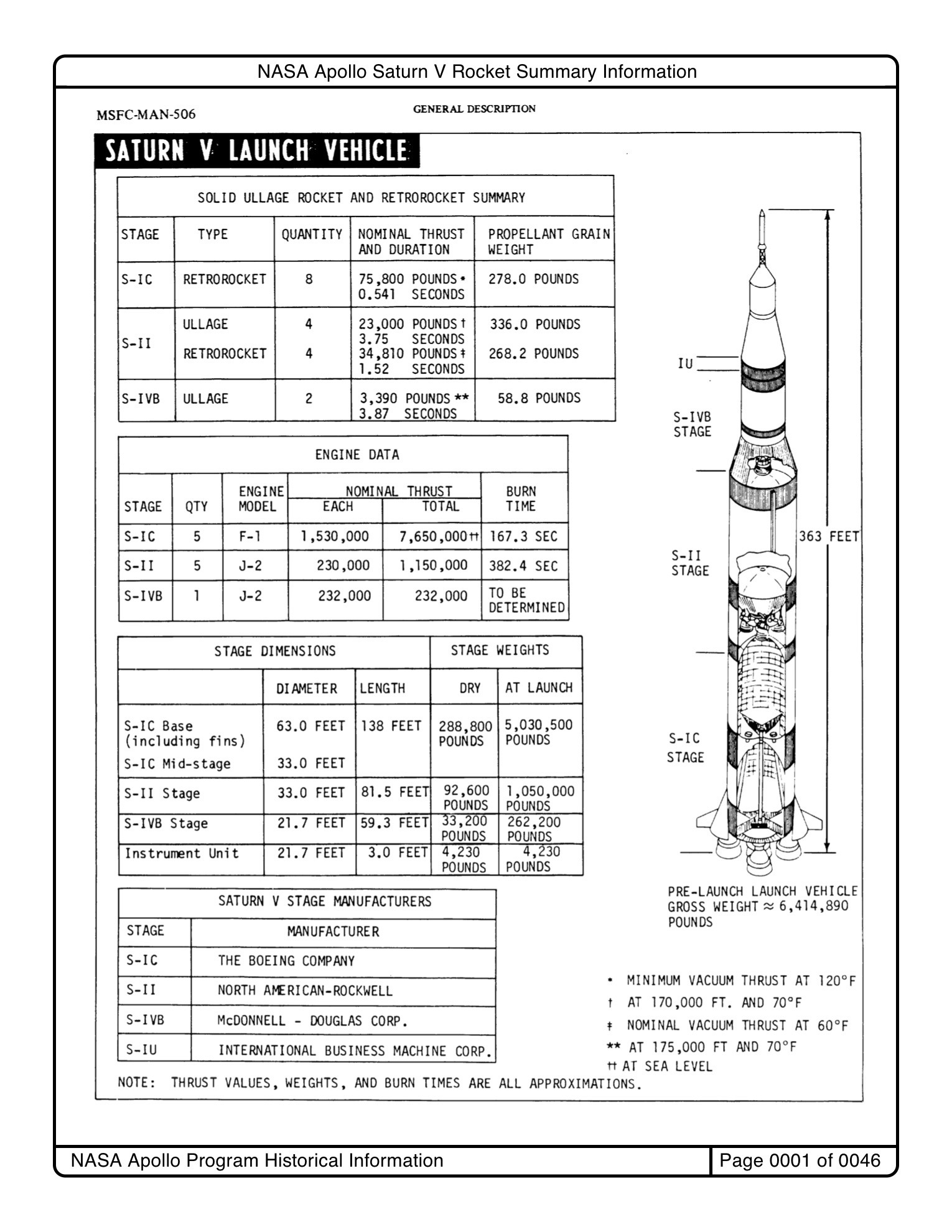
The Saturn V employed a three-stage design, each powered by different engines. The first stage, built by Boeing, used five Rocketdyne F-1 engines, which remain the most powerful single-chamber liquid-fueled rocket engines ever built. The second and third stages, constructed by North American Aviation and Douglas Aircraft respectively, were propelled by J-2 engines, which utilized liquid hydrogen and liquid oxygen propellants.
Developed under the direction of Wernher von Braun at NASA’s Marshall Space Flight Center, the Saturn V exemplified the apex of 1960s rocket engineering. Standing 363 feet (110.6 meters) tall and 33 feet (10 meters) in diameter, it dwarfed all previous rockets. Fully fueled, it weighed a staggering 6.4 million pounds (2.9 million kilograms) and generated 7.6 million pounds (34 million newtons) of thrust at liftoff, more power than 85 Hoover Dams.
Missions and Achievements
Between 1967 and 1973, NASA launched 13 Saturn V rockets, including the historic Apollo 11 mission that landed the first humans on the Moon. The Saturn V also facilitated other significant milestones, such as the Apollo 8 mission, which saw humans orbit the Moon for the first time, and the launch of Skylab, America’s first space station.
The Saturn V’s payload capacity was unrivaled in its time. It could launch over 260,000 pounds (118,000 kilograms) into low Earth orbit and send over 100,000 pounds (45,000 kilograms) into a trans-lunar trajectory. This immense capability allowed NASA to send complete Apollo spacecraft, consisting of the Command/Service Module and Lunar Module, to the Moon in a single launch.
The SpaceX Starship: Pioneering Reusability and Rapid Iteration
Design and Specifications
Fast-forward to the 21st century, and SpaceX’s Starship represents a paradigm shift in rocket design and manufacturing. Developed with the goal of enabling affordable, regular flights to the Moon, Mars, and beyond, Starship embodies SpaceX’s ethos of rapid iteration and reusability.
The Starship launch system consists of two primary components: the Super Heavy booster and the Starship spacecraft. Combined, they stand 394 feet (120 meters) tall, eclipsing the Saturn V. The Super Heavy, powered by up to 33 Raptor engines, provides the immense thrust needed to lift the Starship spacecraft out of Earth’s atmosphere. The Starship itself, equipped with six Raptor engines, serves as the upper stage and is designed to be a versatile, fully reusable spacecraft capable of carrying crew and cargo.
One of Starship’s most innovative features is its use of stainless steel for the primary structure. This decision, driven by both cost and performance considerations, allows for a more robust and heat-resistant vehicle compared to traditional aluminum or carbon composite designs. Starship also employs a novel approach to thermal protection, using hexagonal ceramic tiles to shield the spacecraft during atmospheric reentry.
Iterative Testing and Development
In contrast to the Saturn V’s more traditional development process, SpaceX has embraced an iterative, “build, fly, iterate” approach with Starship. Starting with smaller prototypes and gradually scaling up, SpaceX has conducted numerous tests, ranging from short hop flights to high-altitude flights and landing attempts. This rapid testing cadence has allowed SpaceX to quickly identify and address design issues, refine systems, and make progress at an unprecedented pace.
As of early 2024, SpaceX has conducted 4 orbital test flights of the integrated Starship system, demonstrating key capabilities such as stage separation, Starship’s heat shield performance during reentry, and the Super Heavy booster’s ability to perform a controlled splashdown. While none of these tests have achieved complete success yet, each has provided valuable data and insights to inform future iterations and improvements.
Comparative Analysis
Size and Power
In terms of sheer size and power, the Saturn V and Starship are closely matched. The Saturn V stood 363 feet tall, while Starship and Super Heavy combined reach 394 feet. The Saturn V generated 7.6 million pounds of thrust at liftoff, while Starship’s Super Heavy booster is designed to produce up to 16 million pounds of thrust, more than twice that of its predecessor.
However, it’s important to note that Starship’s thrust advantage is partially offset by its greater dry mass compared to the Saturn V. The Saturn V’s stages were designed to be as lightweight as possible, utilizing aluminum structures and optimized designs. In contrast, Starship’s stainless steel construction and larger size contribute to a higher dry mass, which in turn requires more thrust to achieve similar performance.
Payload Capacity and Missions
The Saturn V was purpose-built for the Apollo program, with a primary focus on sending humans to the Moon. Its payload capacity of over 260,000 pounds to low Earth orbit and 100,000 pounds to trans-lunar injection was tailored to this goal. While theoretically capable of other missions, the Saturn V was never used beyond Apollo and the launch of Skylab.
Starship, on the other hand, is designed as a multi-purpose vehicle, capable of serving a wide range of missions. SpaceX envisions Starship not only ferrying crew and cargo to the Moon, but also enabling regular flights to Mars, launching large payloads to Earth orbit, and even providing rapid point-to-point transportation on Earth.
In terms of raw payload capacity, Starship is expected to exceed the Saturn V, with a projected capability of delivering over 150 tons to low Earth orbit in a fully reusable configuration, and potentially over 250 tons in an expendable mode. This increased capacity opens up new possibilities for large space infrastructure projects, such as space habitats and deep space exploration missions.
Reusability and Cost
Perhaps the most significant difference between the Saturn V and Starship lies in their approach to reusability. The Saturn V was entirely expendable, with each rocket used for only one mission. While this approach was typical for the era, it resulted in high costs and limited launch frequency.
Starship, in contrast, is designed from the ground up for rapid and complete reusability. Both the Super Heavy booster and Starship spacecraft are intended to be capable of multiple flights with minimal refurbishment between missions. This reusability is key to SpaceX’s vision of making spaceflight more affordable and accessible.
By reusing Starship and Super Heavy, SpaceX aims to dramatically reduce the cost per launch compared to traditional expendable rockets. While exact figures remain speculative at this stage, Elon Musk has suggested that the operational cost per launch could be as low as $2 million, a fraction of the Saturn V’s cost which, adjusted for inflation, would be over $1 billion per launch today.
Technological Advancements
The Saturn V represented the pinnacle of 1960s rocket technology, with innovations such as the powerful F-1 engines, lightweight stage structures, and the use of liquid hydrogen as a high-efficiency propellant. However, the fundamental technologies and design principles were rooted in the era’s limitations and available materials.
Starship benefits from over 50 years of advancements in rocket engine design, materials science, manufacturing techniques, and computer modeling. The Raptor engines, which power both the Super Heavy and Starship, utilize advanced full-flow staged combustion, allowing for higher efficiency and performance compared to the Saturn V’s engines.
Starship’s use of stainless steel, while seemingly a step back from more advanced composites, offers unique advantages in terms of cost, strength, and thermal properties. The vehicle’s heat shield, composed of thousands of hexagonal ceramic tiles, is a significant advancement over the ablative heat shields used on the Apollo spacecraft.
Moreover, Starship’s development has been aided by modern computational fluid dynamics, finite element analysis, and other simulation tools that allow for rapid design iterations and optimization. These tools, combined with SpaceX’s vertically integrated manufacturing and agile development approach, have enabled a pace of progress that would have been unimaginable during the Apollo era.
Looking to the Future
As SpaceX continues to refine and test Starship, the vehicle’s full potential remains to be seen. However, its promise is undeniable. If successful, Starship could revolutionize human spaceflight, opening up new frontiers for exploration and commerce.
In the near term, Starship is set to play a crucial role in NASA’s Artemis program, which aims to return humans to the Moon and establish a sustainable presence there. SpaceX has been selected to develop the Starship-based Human Landing System (HLS) that will ferry astronauts from lunar orbit to the surface. This mission, targeted for 2026, will mark the first crewed lunar landing since Apollo 17 in 1972.
Looking further ahead, Starship could enable regular cargo and crew flights to the Moon, supporting the construction of lunar bases and infrastructure. It could also serve as the backbone for missions to Mars, carrying the large payloads and crews needed to establish a permanent human presence on the Red Planet.
Beyond exploration, Starship’s low cost and high flight rate could spur the development of new space-based industries, such as space manufacturing, space tourism, and even intercontinental point-to-point transportation on Earth. Much like how the Saturn V and Apollo program inspired a generation and pushed the boundaries of what was thought possible, Starship has the potential to usher in a new era of spaceflight and exploration.
Summary
| Specification | Saturn V | SpaceX Starship |
|---|---|---|
| Height | 363 ft (110.6 m) | 394 ft (120 m) |
| Diameter | 33 ft (10 m) | 30 ft (9 m) |
| Stages | 3 | 2 |
| Liftoff Thrust | 7.6 million lbf (34 MN) | 16 million lbf (72 MN) |
| Payload to LEO | 260,000 lb (118,000 kg) | 100+ t (220,000+ lb) |
| Payload to Lunar Surface | 100,000 lb (45,000 kg) with Apollo spacecraft | 100+ t (220,000+ lb) |
| First Stage Engines | 5 Rocketdyne F-1 | 33 SpaceX Raptor |
| Second Stage Engines | 5 Rocketdyne J-2 | 6 SpaceX Raptor |
| Third Stage Engines | 1 Rocketdyne J-2 | N/A |
| Propellants | Liquid oxygen, RP-1 (kerosene), liquid hydrogen | Liquid oxygen, liquid methane |
| Reusability | Expendable | Fully reusable |
| Development Period | 1960s | 2010s-2020s |
The Saturn V and SpaceX Starship, while separated by decades and reflecting different eras of spaceflight, share a common thread of pushing the limits of human ingenuity and engineering. The Saturn V, with its monumental scale and power, achieved what was once thought impossible, landing humans on another celestial body. Starship, with its rapid reusability and versatility, aims to build upon that legacy, making spaceflight more accessible, affordable, and routine.
As we reflect on the achievements of the past and look to the future, it’s clear that vehicles like the Saturn V and Starship represent more than just technological marvels. They are symbols of human aspiration, the embodiment of our drive to explore, discover, and push beyond the boundaries of our world. Whether carrying astronauts to the Moon, or paving the way for a multiplanetary future, these rockets stand as testaments to the power of human ingenuity and the enduring spirit of exploration.


