Introduction
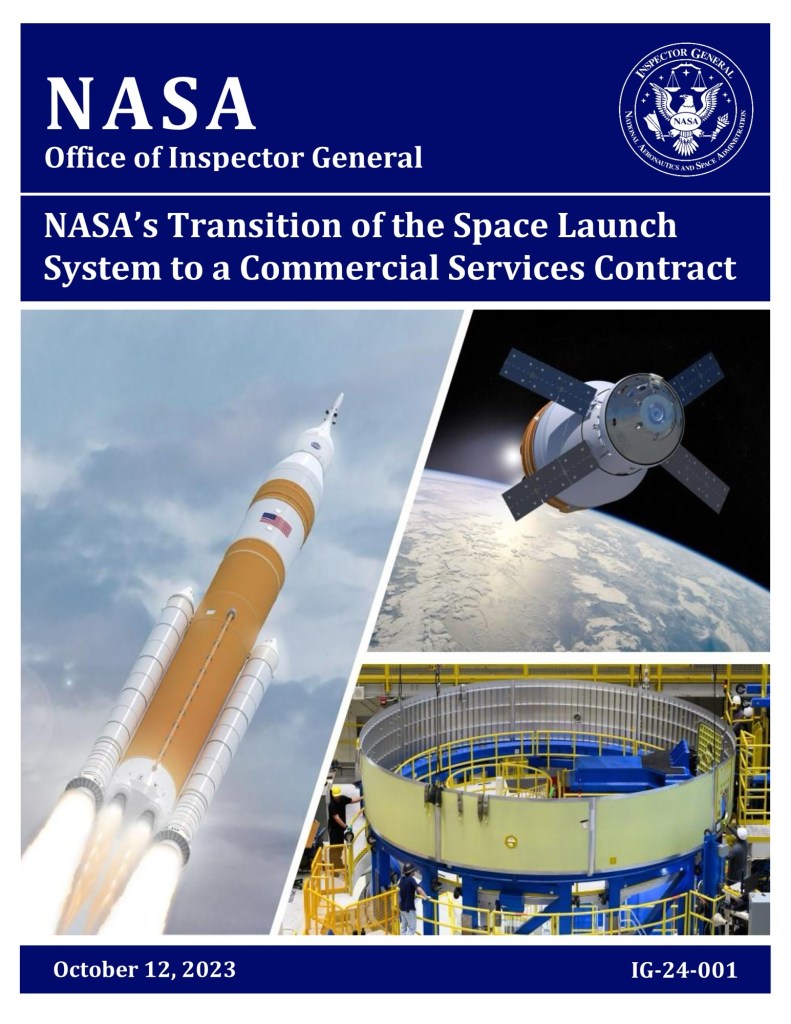
NASA’s Artemis campaign represents an ambitious endeavor to return humans to the Moon and eventually send crewed missions to Mars. Central to this mission is the Space Launch System (SLS), a heavy-lift rocket that plays a key role in launching the Orion spacecraft into space. The Artemis I mission successfully tested this system, albeit after significant delays and cost overruns. As NASA transitions from Artemis I to subsequent missions, the agency faces increasing complexity and costs, especially as it prepares for the more advanced Artemis IV and beyond.
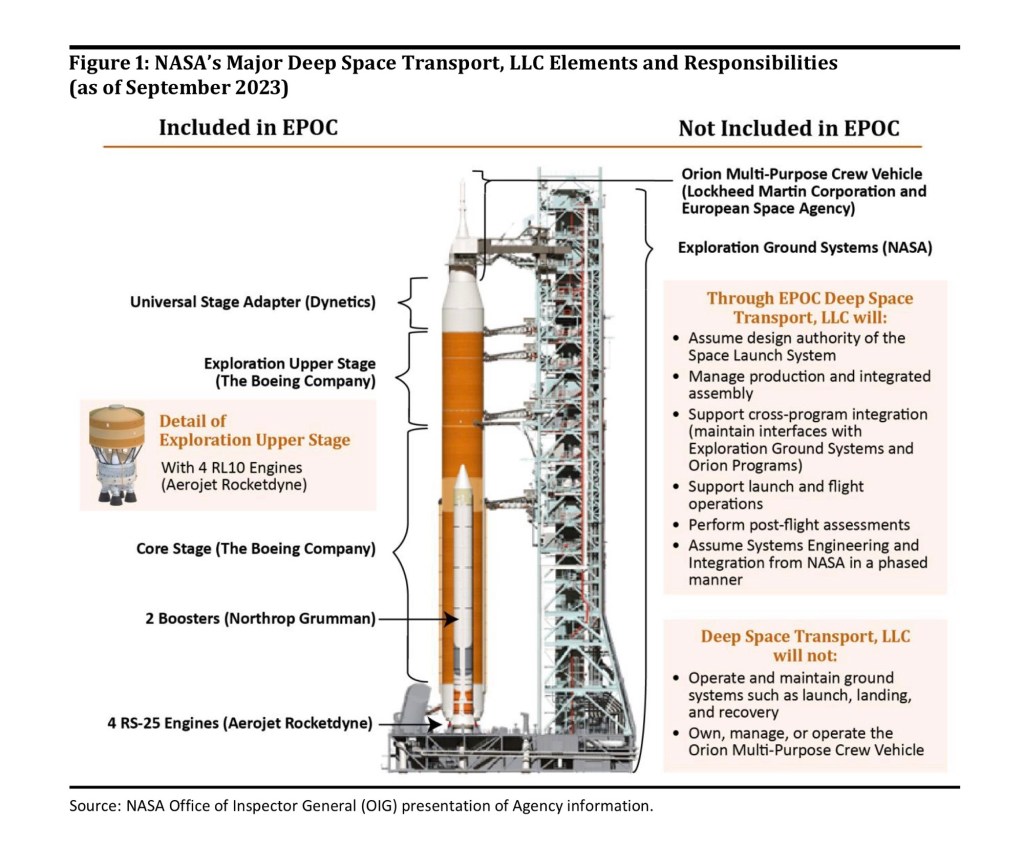
To address these challenges, NASA is implementing a new contract strategy known as the Exploration Production and Operations Contract (EPOC). This contract will consolidate the production, integration, and launch of the SLS under a single joint venture, Deep Space Transport, LLC (DST), a partnership between Boeing and Northrop Grumman. By shifting to a commercial services contract, NASA hopes to reduce costs and improve efficiency in the long term. However, achieving these objectives remains a significant challenge due to various factors, including high initial costs, limited competition, and reliance on sole-source contracts.
This article explores NASA’s transition to the EPOC model, the expected challenges, and the potential implications for the Artemis program and future space exploration missions.
Background: The Space Launch System and Artemis Program
The Artemis program is NASA’s most ambitious human space exploration effort since the Apollo era. The program seeks to establish a sustainable human presence on the Moon by the end of the decade and pave the way for future missions to Mars. The SLS is the backbone of this effort, designed to launch both crewed and cargo missions to the Moon and beyond.
The SLS program has faced significant challenges since its inception, including delays and cost overruns. NASA’s Office of Inspector General (OIG) estimates that the total cost of the Artemis program will reach $93 billion by 2025, with the SLS program accounting for approximately $23.8 billion of that total. The first uncrewed mission, Artemis I, was completed in December 2022 after nearly four years of delays and billions of dollars in additional costs.
Artemis IV and subsequent missions will involve more complex space systems, including the Gateway lunar outpost, a Human Landing System, and a more powerful variant of the SLS, known as Block 1B. These advancements are necessary to achieve NASA’s deep space exploration goals but will also increase the overall cost and complexity of the program.


Transition to the Exploration Production and Operations Contract
In an effort to make the Artemis program more affordable, NASA is transitioning the SLS program to a commercial services contract under the EPOC. The contract will be awarded to DST, a joint venture between Boeing and Northrop Grumman, which currently supply key components of the SLS. Under EPOC, DST will assume responsibility for the production, systems integration, and launch of at least five SLS flights, starting with Artemis V in 2029.
The shift to a commercial services contract represents a significant change in NASA’s approach to space exploration. Instead of managing multiple individual contracts for different components of the SLS, NASA will procure launch services from DST as a complete package. This model is intended to streamline operations, reduce costs, and enable more efficient production of the SLS.
However, transitioning to the EPOC model presents several challenges. NASA will use a three-year Pre-EPOC contract to evaluate DST’s readiness to take on full responsibility for the SLS program. During this period, NASA will continue to manage individual SLS contracts while monitoring DST’s performance. The success of this transition will depend on DST’s ability to manage the production and integration of SLS components effectively.
Challenges in Achieving Cost Savings
NASA’s goal under EPOC is to reduce the cost of producing an SLS rocket by 50 percent. Currently, the cost of producing a single SLS Block 1B rocket is estimated at $2.5 billion. NASA hopes to reduce this cost to $1.25 billion through various efficiency measures, including workforce reductions, manufacturing improvements, and increased economies of scale.
However, achieving these cost savings is likely to be difficult. The OIG’s analysis suggests that NASA’s cost-saving initiatives may fall short of expectations due to unrealistic assumptions. For example, reducing the workforce involved in SLS production may not lead to significant cost reductions, as many of the production processes require a large and specialized labor force. Similarly, while NASA hopes to achieve economies of scale by increasing the number of SLS rockets produced, finding additional customers beyond NASA has proven challenging.
Another major obstacle to cost reduction is the lack of competition in the heavy-lift launch market. The SLS program has been developed under sole-source contracts with Boeing and Northrop Grumman, which limits NASA’s ability to negotiate lower prices. While competition has driven down costs in other NASA programs, such as the Commercial Crew Program, the lack of viable alternatives to the SLS makes it difficult for NASA to leverage competitive pricing.
The Role of Fixed-Price Contracts
One of NASA’s key strategies for reducing costs under EPOC is to shift from cost-reimbursable contracts to fixed-price contracts. Under a fixed-price contract, the contractor is responsible for managing costs and delivering the agreed-upon product or service at a predetermined price. This approach incentivizes contractors to control costs and improve efficiency.
However, NASA has not yet determined the extent to which fixed-price contracts will be used under EPOC. The OIG has raised concerns about the continued use of cost-reimbursable contracts, which have historically led to significant cost overruns in the SLS program. Without a clear commitment to fixed-price contracts, it is unlikely that NASA will achieve its cost-saving goals.
Additionally, NASA’s ability to negotiate favorable terms with DST will be hampered by the lack of competition. Sole-source contracts, by their nature, do not benefit from the price reductions that can be achieved through competitive bidding. As a result, NASA may struggle to secure fixed-price contracts that significantly reduce the cost of the SLS.
Intellectual Property and Data Rights
Another challenge facing NASA as it transitions to the EPOC model is the issue of intellectual property and data rights. Over the years, NASA has allowed its contractors, including Boeing and Northrop Grumman, to incorporate limited rights data into the design of key SLS components. This means that other companies cannot easily replicate the SLS without negotiating access to this proprietary data.
The reliance on limited rights data makes it difficult for NASA to introduce competition into the SLS program in the future. Any new contractor would need to either negotiate access to the data or develop entirely new manufacturing processes, both of which would be time-consuming and expensive. As a result, NASA is effectively locked into its current relationship with Boeing and Northrop Grumman for the foreseeable future.
To mitigate this issue, NASA is considering including Federal Acquisition Regulation (FAR) provisions in the EPOC contract that would help protect the government’s rights to data and intellectual property. These provisions could provide NASA with more flexibility in the future and make it easier to introduce competition if and when viable alternatives to the SLS become available.
Lessons from the Space Shuttle Program
NASA’s transition to a commercial services contract for the SLS program is not without precedent. The agency previously employed a similar strategy with the Space Shuttle program, which was operated by United Space Alliance, a joint venture between Boeing and Lockheed Martin. The Shuttle Flight Operations Contract was intended to reduce costs and improve efficiency, but in practice, it led to an increase in operational costs.
The Space Shuttle program offers several lessons for NASA as it transitions to the EPOC model. One key takeaway is the importance of maintaining government oversight during the transition. While reducing oversight can lead to short-term cost savings, it can also introduce risks that ultimately increase costs in the long run. NASA must strike a balance between reducing costs and ensuring the safety and success of the Artemis missions.
The Future of the Space Launch System
Despite the challenges, the SLS remains a critical component of NASA’s Artemis program and its broader Moon to Mars exploration strategy. The SLS is currently the only launch vehicle capable of meeting the Artemis program’s requirements, including lifting the Orion spacecraft to lunar orbit.
However, the landscape of the heavy-lift launch market is rapidly evolving. In the next few years, new commercial alternatives to the SLS may become available. Companies like SpaceX and Blue Origin are developing reusable launch systems that could compete with the SLS in terms of cost and capability. These developments could provide NASA with more options in the future and help drive down the overall cost of deep space exploration.
NASA will need to closely monitor these developments and consider how they fit into its long-term exploration plans. While the SLS is essential for the Artemis program in the near term, the agency should remain open to exploring more affordable and sustainable alternatives as they become available.
Summary
NASA’s transition of the Space Launch System to a commercial services contract represents a major shift in the agency’s approach to space exploration. By consolidating production, integration, and launch services under a single contract with Deep Space Transport, LLC, NASA hopes to reduce costs and improve efficiency in the long term. However, achieving these goals will be challenging due to high initial costs, limited competition, and reliance on sole-source contracts.
NASA’s goal of reducing SLS production costs by 50 percent is ambitious, but it may not be achievable given the current constraints. The agency will need to carefully manage the transition to the EPOC model, including negotiating favorable contract terms, protecting its intellectual property rights, and maintaining government oversight.
Looking ahead, the development of new commercial launch systems could provide NASA with more options and help drive down the cost of deep space exploration. While the SLS is critical for the Artemis program in the near term, NASA should remain flexible and open to considering more affordable alternatives as they emerge.