

As an Amazon Associate we earn from qualifying purchases.

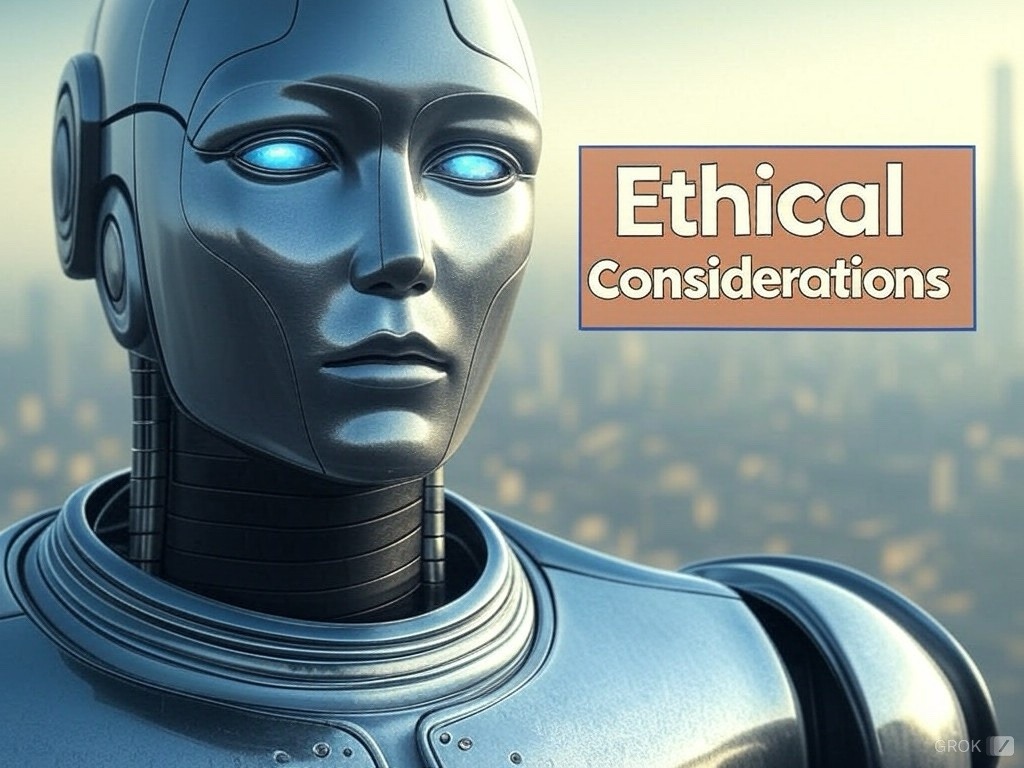
The relationship between humanity and technology has long been a topic of exploration in science fiction, philosophy, and scientific inquiry. Various entities such as cyborgs, androids, robots, replicants, clones, and genetically enhanced beings occupy this conceptual and technological space. Each of these terms refers to distinct categories of beings, yet they share thematic intersections that raise questions about humanity, identity, and ethics.
Definitions and Characteristics
Cyborgs
Cyborgs, or cybernetic organisms, are beings that integrate biological and mechanical components. They can be human individuals enhanced with technology, such as prosthetic limbs, neural implants, or other augmentations designed to restore or enhance physical and cognitive abilities. While many examples of cyborgs are grounded in medical and assistive technologies, speculative fiction often portrays them as hybrids designed for superior performance in areas like combat or space exploration.
The real-world development of cyborg technologies has profound implications for healthcare, particularly in restoring mobility or sensory functions. However, as technological integration progresses, ethical questions arise regarding the boundary between enhancement and identity. Is a human with extensive technological augmentations still fully human? This question resonates in cultural narratives and debates about transhumanism, a movement that seeks to transcend human limitations through technology.
Androids
Androids are robots designed to resemble humans in both appearance and behavior. Their defining characteristic is their anthropomorphic design, which can range from highly realistic depictions of human faces and bodies to simplified versions that merely mimic human form.
Advances in artificial intelligence (AI) have allowed androids to become increasingly sophisticated in replicating human interaction. These developments are visible in industries such as customer service, elder care, and entertainment. Fictional androids, such as those seen in films and literature, often raise philosophical questions about consciousness and free will. If an android were advanced enough to mimic human behavior and emotions, would it possess rights equivalent to a human being?
Robots
Robots encompass a broader category of mechanical entities capable of performing tasks autonomously or semi-autonomously. Unlike androids, robots do not necessarily mimic human appearance or behavior. Instead, they are designed with functionality in mind, ranging from industrial robots on manufacturing lines to robotic explorers on other planets.
Robots are integral to modern industry, healthcare, and exploration. For example, robotic arms assemble cars, and robotic rovers like NASA’s Perseverance explore Mars. The ethical considerations surrounding robots often focus on their impact on labor markets, societal dependency on automation, and the development of autonomous military systems.
Replicants
The term “replicant” originates from speculative fiction, notably in the film Blade Runner. Replicants are bioengineered beings virtually indistinguishable from humans but designed for specific tasks, such as labor or combat. They are often depicted as having a limited lifespan or programmed obedience.
Replicants challenge traditional notions of humanity. If a being is created biologically and is indistinguishable from a natural human in thought and emotion, does it hold the same moral and legal status? Fiction often explores these questions by emphasizing the replicants’ struggle for autonomy and identity, reflecting broader concerns about exploitation and the ethics of creating life.
Clones
Clones are biological duplicates created through the replication of genetic material. While cloning technology exists in modern science—for instance, in agricultural and medical applications—the concept of human cloning remains a subject of intense debate and ethical scrutiny.
Human cloning raises questions about individuality, identity, and the moral implications of “manufacturing” life. Would a cloned individual possess the same rights as a naturally conceived person? How would society address potential issues of inequality or exploitation? Cloning also raises questions about the role of nature versus nurture in shaping identity.
Genetically Enhanced Beings
Genetically enhanced beings are individuals whose genetic makeup has been altered to improve physical, cognitive, or other traits. Advances in gene-editing technologies, such as CRISPR, have brought the possibility of genetic enhancement closer to reality. Potential applications include disease prevention, increased intelligence, or physical augmentation.
While the potential benefits of genetic enhancement are significant, they also present ethical and societal challenges. For instance, genetic enhancements could exacerbate social inequalities, creating divisions between those who can afford such technologies and those who cannot. Additionally, the long-term implications of altering human genetics remain uncertain, raising concerns about unforeseen consequences for individuals and populations.
Ethical and Philosophical Arguments
The development and integration of cyborgs, androids, robots, replicants, clones, and genetically enhanced beings introduce complex ethical questions. These debates center on autonomy, identity, and societal impact.
Autonomy and Consent
One critical concern is the autonomy of these entities. In the case of androids, robots, and replicants, questions arise regarding their capacity for independent thought and decision-making. If an entity is programmed to obey, does it possess free will? Similarly, issues of consent are paramount for clones or genetically enhanced beings who may not have chosen their modified states.
Identity and Humanity
Another significant issue is the definition of humanity. If a cyborg or replicant possesses all the characteristics of a human, is it entitled to the same rights and recognition? This question becomes particularly relevant in the context of genetic enhancement, where alterations may challenge traditional definitions of human nature.
Societal Impact
The integration of these entities into society has far-reaching implications. Automation and robotics, for instance, raise concerns about job displacement and economic inequality. Meanwhile, genetic enhancements and cloning could lead to social stratification or discrimination. Addressing these issues requires careful consideration of regulatory frameworks and ethical guidelines.
Summary
Cyborgs, androids, robots, replicants, clones, and genetically enhanced beings represent the intersection of humanity and technology. Each category presents unique opportunities and challenges, from advancing healthcare and exploration to raising profound ethical questions about autonomy, identity, and societal impact. As these technologies continue to evolve, society must grapple with their implications, ensuring that progress aligns with principles of equity, dignity, and respect for all forms of life.
10 Best-Selling Science Fiction Books Worth Reading
Dune
Frank Herbert’s Dune is a classic science fiction novel that follows Paul Atreides after his family takes control of Arrakis, a desert planet whose spice is the most valuable resource in the universe. The story combines political struggle, ecology, religion, and warfare as rival powers contest the planet and Paul is drawn into a conflict that reshapes an interstellar civilization. It remains a foundational space opera known for its worldbuilding and long-running influence on the science fiction genre.
Foundation
Isaac Asimov’s Foundation centers on mathematician Hari Seldon, who uses psychohistory to forecast the collapse of a galactic empire and designs a plan to shorten the coming dark age. The narrative spans generations and focuses on institutions, strategy, and social forces rather than a single hero, making it a defining work of classic science fiction. Its episodic structure highlights how knowledge, politics, and economic pressures shape large-scale history.
Ender’s Game
Orson Scott Card’s Ender’s Game follows Andrew “Ender” Wiggin, a gifted child recruited into a military training program designed to prepare humanity for another alien war. The novel focuses on leadership, psychological pressure, and ethical tradeoffs as Ender is pushed through increasingly high-stakes simulations. Often discussed as military science fiction, it also examines how institutions manage talent, fear, and information under existential threat.
The Hitchhiker’s Guide to the Galaxy
Douglas Adams’s The Hitchhiker’s Guide to the Galaxy begins when Arthur Dent is swept off Earth moments before its destruction and launched into an absurd interstellar journey. Blending comedic science fiction with satire, the book uses space travel and alien societies to lampoon bureaucracy, technology, and human expectations. Beneath the humor, it offers a distinctive take on meaning, randomness, and survival in a vast and indifferent cosmos.
1984
George Orwell’s 1984 portrays a surveillance state where history is rewritten, language is controlled, and personal autonomy is systematically dismantled. The protagonist, Winston Smith, works within the machinery of propaganda while privately resisting its grip, which draws him into escalating danger. Frequently categorized as dystopian fiction with strong science fiction elements, the novel remains a reference point for discussions of authoritarianism, mass monitoring, and engineered reality.
Brave New World
Aldous Huxley’s Brave New World presents a society stabilized through engineered reproduction, social conditioning, and pleasure-based control rather than overt terror. The plot follows characters who begin to question the costs of comfort, predictability, and manufactured happiness, especially when confronted with perspectives that do not fit the system’s design. As a best-known dystopian science fiction book, it raises enduring questions about consumerism, identity, and the boundaries of freedom.
Fahrenheit 451
Ray Bradbury’s Fahrenheit 451 depicts a future where books are outlawed and “firemen” burn them to enforce social conformity. The protagonist, Guy Montag, begins as a loyal enforcer but grows increasingly uneasy as he encounters people who preserve ideas and memory at great personal risk. The novel is often read as dystopian science fiction that addresses censorship, media distraction, and the fragility of informed public life.
The War of the Worlds
H. G. Wells’s The War of the Worlds follows a narrator witnessing an alien invasion of England, as Martian technology overwhelms existing military and social structures. The story emphasizes panic, displacement, and the collapse of assumptions about human dominance, offering an early and influential depiction of extraterrestrial contact as catastrophe. It remains a cornerstone of invasion science fiction and helped set patterns still used in modern alien invasion stories.
Neuromancer
William Gibson’s Neuromancer follows Case, a washed-up hacker hired for a high-risk job that pulls him into corporate intrigue, artificial intelligence, and a sprawling digital underworld. The book helped define cyberpunk, presenting a near-future vision shaped by networks, surveillance, and uneven power between individuals and institutions. Its language and concepts influenced later depictions of cyberspace, hacking culture, and the social impact of advanced computing.
The Martian
Andy Weir’s The Martian focuses on astronaut Mark Watney after a mission accident leaves him stranded on Mars with limited supplies and no immediate rescue plan. The narrative emphasizes problem-solving, engineering improvisation, and the logistical realities of survival in a hostile environment, making it a prominent example of hard science fiction for general readers. Alongside the technical challenges, the story highlights teamwork on Earth as agencies coordinate a difficult recovery effort.
10 Best-Selling Science Fiction Movies to Watch
Interstellar
In a near-future Earth facing ecological collapse, a former pilot is recruited for a high-risk space mission after researchers uncover a potential path to another star system. The story follows a small crew traveling through extreme environments while balancing engineering limits, human endurance, and the emotional cost of leaving family behind. The narrative blends space travel, survival, and speculation about time, gravity, and communication across vast distances in a grounded science fiction film framework.
Blade Runner 2049
Set in a bleak, corporate-dominated future, a replicant “blade runner” working for the police discovers evidence that could destabilize the boundary between humans and engineered life. His investigation turns into a search for hidden history, missing identities, and the ethical consequences of manufactured consciousness. The movie uses a cyberpunk aesthetic to explore artificial intelligence, memory, and state power while building a mystery that connects personal purpose to civilization-scale risk.
Arrival
When multiple alien craft appear around the world, a linguist is brought in to establish communication and interpret an unfamiliar language system. As global pressure escalates, the plot focuses on translating meaning across radically different assumptions about time, intent, and perception. The film treats alien contact as a problem of information, trust, and geopolitical fear rather than a simple battle scenario, making it a standout among best selling science fiction movies centered on first contact.
Inception
A specialist in illicit extraction enters targets’ dreams to steal or implant ideas, using layered environments where time and physics operate differently. The central job requires assembling a team to build a multi-level dream structure that can withstand psychological defenses and internal sabotage. While the movie functions as a heist narrative, it remains firmly within science fiction by treating consciousness as a manipulable system, raising questions about identity, memory integrity, and reality testing.
Edge of Tomorrow
During a war against an alien force, an inexperienced officer becomes trapped in a repeating day that resets after each death. The time loop forces him to learn battlefield tactics through relentless iteration, turning failure into training data. The plot pairs kinetic combat with a structured science fiction premise about causality, adaptation, and the cost of knowledge gained through repetition. It is often discussed as a time-loop benchmark within modern sci-fi movies.
Ex Machina
A young programmer is invited to a secluded research facility to evaluate a humanoid robot designed with advanced machine intelligence. The test becomes a tense psychological study as conversations reveal competing motives among creator, evaluator, and the synthetic subject. The film keeps its focus on language, behavior, and control, using a contained setting to examine artificial intelligence, consent, surveillance, and how people rationalize power when technology can convincingly mirror human emotion.
The Fifth Element
In a flamboyant future shaped by interplanetary travel, a cab driver is pulled into a crisis involving an ancient weapon and a looming cosmic threat. The story mixes action, comedy, and space opera elements while revolving around recovering four elemental artifacts and protecting a mysterious figure tied to humanity’s survival. Its worldbuilding emphasizes megacities, alien diplomacy, and high-tech logistics, making it a durable entry in the canon of popular science fiction film.
Terminator 2: Judgment Day
A boy and his mother are pursued by an advanced liquid-metal assassin, while a reprogrammed cyborg protector attempts to keep them alive. The plot centers on preventing a future dominated by autonomous machines by disrupting the chain of events that leads to mass automation-driven catastrophe. The film combines chase-driven suspense with science fiction themes about AI weaponization, time travel, and moral agency, balancing spectacle with character-driven stakes.
Minority Report
In a future where authorities arrest people before crimes occur, a top police officer becomes a suspect in a predicted murder and goes on the run. The story follows his attempt to challenge the reliability of predictive systems while uncovering institutional incentives to protect the program’s legitimacy. The movie uses near-future technology, biometric surveillance, and data-driven policing as its science fiction core, framing a debate about free will versus statistical determinism.
Total Recall (1990)
A construction worker seeking an artificial vacation memory experiences a mental break that may be either a malfunction or the resurfacing of a suppressed identity. His life quickly becomes a pursuit across Mars involving corporate control, political insurgency, and questions about what is real. The film blends espionage, off-world colonization, and identity instability, using its science fiction premise to keep viewers uncertain about whether events are authentic or engineered perception.


