


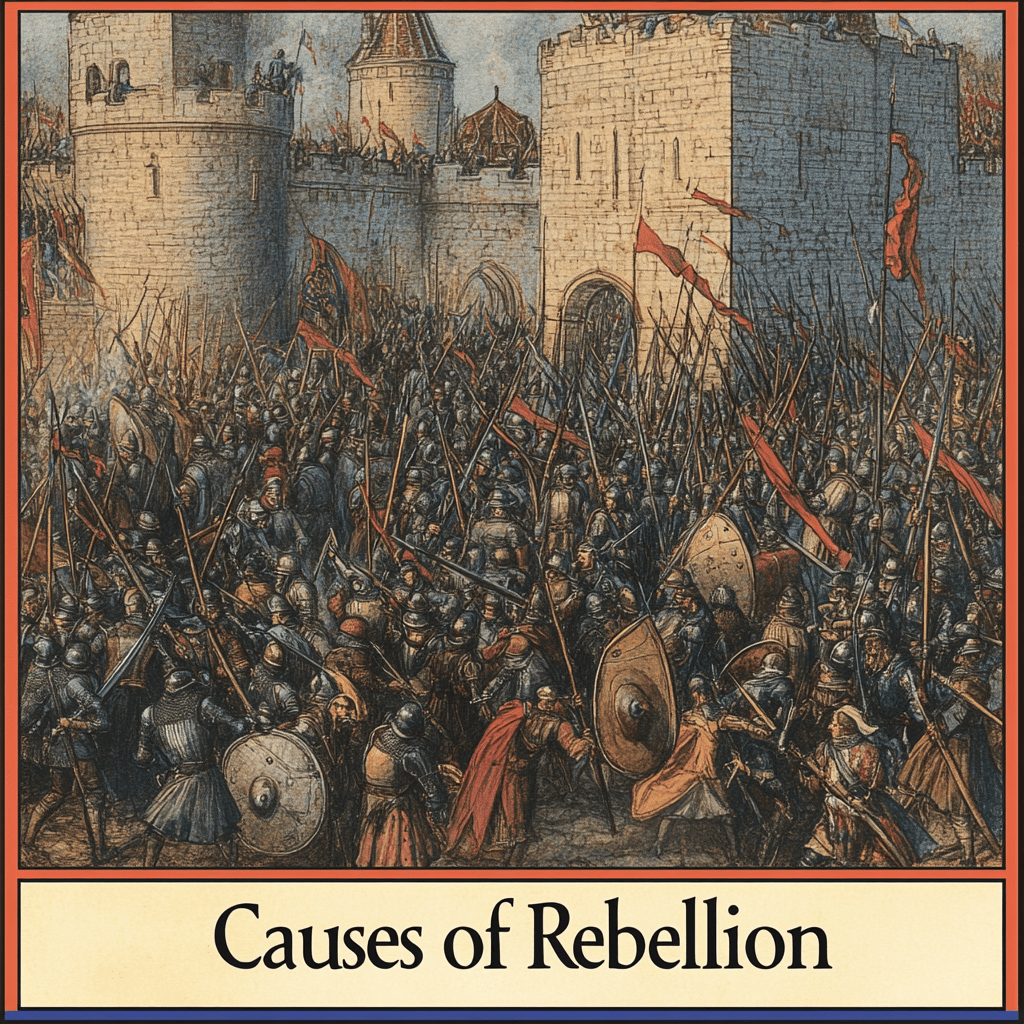
Rebellions have been a persistent feature of human history, arising whenever individuals or groups feel compelled to challenge the authority of governments, institutions, or societal norms. These uprisings are shaped by a multitude of factors, often reflecting the complex interplay of economic, political, social, and cultural grievances. Understanding the causes of rebellions provides valuable insights into the dynamics of power, inequality, and human agency throughout history.
Economic Inequality and Exploitation
Economic disparities have been a consistent cause of rebellion across cultures and eras. When wealth becomes concentrated in the hands of a few, while large segments of the population suffer poverty and deprivation, discontent often boils over into resistance.
- Peasant Revolts: Agrarian societies often experienced peasant uprisings, such as the German Peasants’ War (1524–1525) or the Taiping Rebellion (1850–1864) in China. These rebellions were driven by oppressive taxation, land exploitation, and food shortages.
- Industrial Protests: During the Industrial Revolution, the exploitation of laborers in factories led to widespread worker uprisings, such as the Luddite Rebellion in 19th-century Britain and strikes in the United States.
Economic injustices often intersect with other grievances, amplifying the drive for rebellion. For example, colonial rebellions frequently combined economic exploitation with a lack of political representation.
Political Oppression
Authoritarian regimes and oppressive governance are significant triggers for rebellion. Throughout history, people have risen against leaders and systems that deny them freedom, autonomy, or representation.
- Revolutions for Representation: The American Revolution (1775–1783) stemmed from the colonists’ frustration with “taxation without representation” under British rule. Similarly, the French Revolution (1789–1799) arose from widespread dissatisfaction with the autocratic monarchy and feudal privileges.
- Anti-Colonial Movements: In the 20th century, colonized nations rebelled against imperial powers, with examples including India’s struggle for independence from Britain and Algeria’s war for independence from France.
Rebellions against political oppression often intertwine with demands for democracy, self-determination, and the end of exploitation.
Social Inequality and Discrimination
Social structures that enforce inequality, such as caste systems, slavery, and institutionalized racism, have been major sources of rebellion. Marginalized groups often fight for recognition, dignity, and equal rights.
- Slave Rebellions: Enslaved people have risen against their oppressors in numerous historical contexts, from Spartacus’s revolt in ancient Rome to the Haitian Revolution (1791–1804), which led to the first successful establishment of a state governed by former slaves.
- Civil Rights Movements: While not always classified as rebellions in the traditional sense, large-scale movements such as the American Civil Rights Movement or the fight against apartheid in South Africa were fundamentally efforts to overturn entrenched social injustices.
These uprisings underscore the enduring human demand for equality and justice in the face of entrenched hierarchies.
Religious and Cultural Tensions
Religious and cultural grievances have also sparked significant rebellions. These uprisings often occur when dominant powers suppress the spiritual practices or cultural identities of specific groups.
- Religious Wars: The Thirty Years’ War (1618–1648) began as a rebellion against religious persecution and escalated into a broader conflict across Europe.
- Cultural Resilience: Indigenous uprisings, such as the Pueblo Revolt (1680) against Spanish colonizers in what is now New Mexico, were efforts to preserve native traditions, religions, and ways of life under the threat of cultural annihilation.
While religion can unify and inspire rebellion, it can also complicate conflicts when intertwined with political and economic factors.
Nationalism and Ethnic Identity
The rise of nationalism in the 19th and 20th centuries fueled numerous rebellions, as ethnic and national groups sought autonomy or independence from dominant powers.
- Ethnic Rebellions: Groups such as the Kurds, Basques, and Tibetans have long struggled against dominant states to preserve their identities and achieve self-governance.
- Decolonization: The wave of decolonization following World War II saw rebellions in Asia, Africa, and the Americas as indigenous populations fought against foreign domination.
Nationalist rebellions emphasize the deep connection between cultural identity and political sovereignty.
Technological Advancements
The evolution of technology has often played a role in rebellions by altering power dynamics. For example:
- Printing Press: The dissemination of revolutionary ideas during the Reformation and Enlightenment was enabled by the printing press, which spread information and galvanized dissent.
- Modern Communication: The Arab Spring (2010–2012) showcased how social media can be leveraged to organize protests and amplify calls for political change.
Technological innovations have empowered marginalized groups, providing tools to challenge authority and mobilize resistance.
Environmental and Resource Scarcity
Environmental factors, including resource scarcity and climate change, have historically contributed to rebellions. Famine, drought, and competition over resources often exacerbate existing tensions.
- Climate-Induced Rebellions: Periods of environmental stress, such as the Little Ice Age, have been linked to uprisings like the English Peasants’ Revolt (1381).
- Resource Conflicts: Modern conflicts over water, land, and oil often have their roots in unequal resource distribution and environmental degradation.
The intersection of environmental and social pressures creates volatile conditions that can ignite rebellion.
Psychological and Ideological Drivers
Rebellions are not solely the product of external circumstances; they also stem from deeply held beliefs and aspirations. People rebel when they feel a profound sense of injustice, humiliation, or loss of agency.
- Ideological Revolts: The Russian Revolution (1917) and the rise of communism were driven by ideologies that promised equality and an end to exploitation.
- Mass Movements: Leaders like Mahatma Gandhi and Martin Luther King Jr. have mobilized people around shared ideals, demonstrating that rebellion can take nonviolent forms.
The psychological dimension of rebellion highlights the human capacity for hope and collective action.
Summary
Rebellions throughout human history have been sparked by a range of causes, from economic and political oppression to social inequality, cultural tensions, and environmental stress. While the specific triggers vary, all rebellions reflect the universal human desire for freedom, dignity, and justice. By examining these uprisings, we gain a deeper understanding of the enduring challenges of governance, equity, and coexistence.


