

As an Amazon Associate we earn from qualifying purchases.

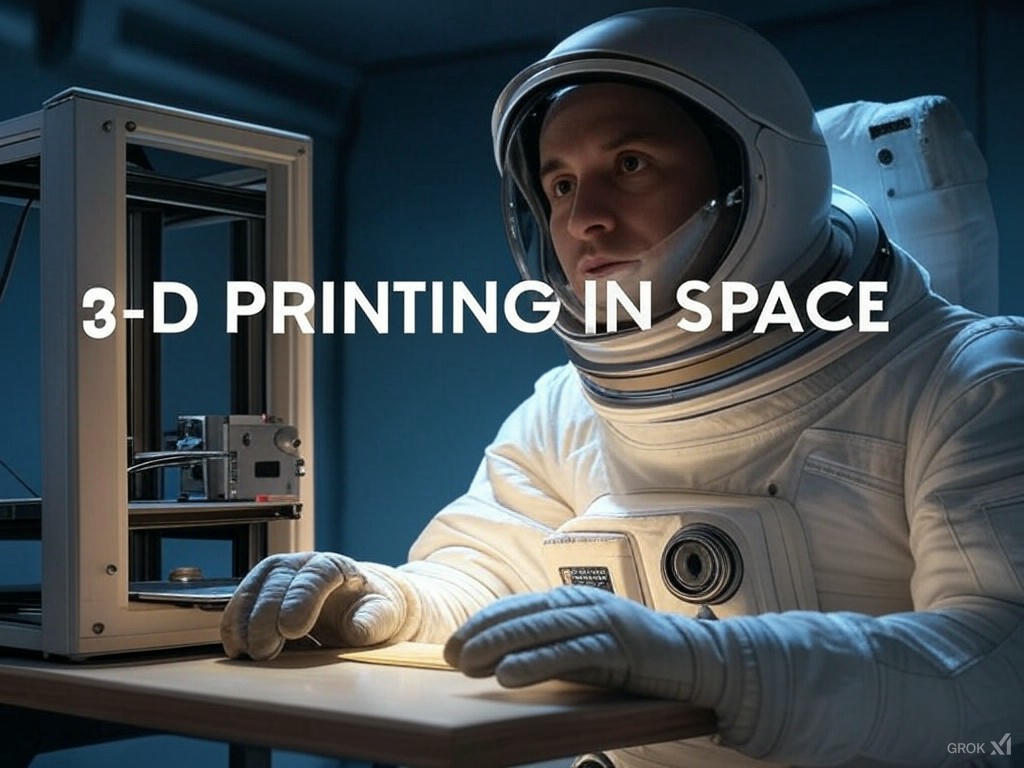
3D printing presents a significant opportunity for manufacturing components directly in space, eliminating the need to transport every necessary part from Earth. By using raw materials sourced from the spacecraft itself or even from extraterrestrial bodies, astronauts could produce tools, replacement parts, and structural components on demand. This capability reduces dependency on costly and time-consuming resupply missions, which remain a major obstacle for extended space travel.
One of the most notable benefits of 3D printing in space is its potential to reduce payload weight. Traditionally, missions require extensive planning to ensure that every possible spare part and tool is included in the cargo. With additive manufacturing, vehicles can carry raw materials while fabricating specific items as needed. This shift significantly lowers launch costs, as heavier payloads require more fuel and resources to transport beyond Earth’s atmosphere.
Additionally, the fabrication capabilities provided by 3D printing enhance mission flexibility. If an unforeseen problem arises, astronauts may not need to rely on ground control to send a replacement part, which could take months or even years to arrive. Instead, they can quickly manufacture the required component onboard, minimizing downtime and preventing small issues from escalating into major failures.
The technology also facilitates the creation of structures that would be difficult or impossible to launch from Earth in their entirety. Scientists have proposed using 3D printers to construct habitats, tools, and even spacecraft parts using materials sourced from asteroids, the Moon, or Mars. By utilizing in-situ resources, missions could extend their duration without requiring continuous Earth-based supply chains.
Another advantage is waste reduction. Space missions generate various forms of waste, including plastic packaging and used tools. Rather than discarding these materials, certain 3D printing techniques allow them to be reprocessed into usable feedstock for new prints. This closed-loop system promotes sustainability, an essential factor for long-term habitation beyond Earth.
Customization is another key strength of additive manufacturing in space. Unlike mass-produced items, 3D-printed components can be tailored to meet specific needs, whether for scientific instruments, medical tools, or structural reinforcements. This adaptability ensures that astronauts have access to the exact equipment required for their mission without relying on pre-supplied inventories.
Incorporating 3D printing into space travel represents a significant shift in how humanity approaches deep-space exploration. By minimizing dependency on Earth-based logistics and enabling real-time manufacturing, this technology opens the door to longer, more sustainable missions.
Despite its numerous benefits, space-based 3D printing faces several technical, material, and logistical challenges. One of the primary issues involves the microgravity environment, which can affect the adhesion and layering process critical to additive manufacturing. Unlike on Earth, where gravity helps secure layers in place, the microgravity of space requires modifications to printing techniques to ensure structural integrity and precision.
Material selection presents another obstacle. While various plastics and metals have been used successfully in 3D printing on Earth, their behavior in space conditions differs. Factors such as vacuum exposure, extreme temperature fluctuations, and radiation can degrade materials over time. Researchers are exploring specialized composites and space-grade polymers that can withstand these environmental stresses, but further advancements are necessary before they can be widely implemented.
Ensuring reliability is another key concern. Manufactured components must meet stringent safety and durability standards, particularly for critical applications such as life-support systems and structural elements. Thorough testing is required to confirm that printed parts can endure launches, prolonged space exposure, and mechanical stresses. Standardizing these testing procedures across different missions and environments remains a work in progress.
The integration of 3D printing into space missions also requires advancements in automation and robotics. While current systems rely on human oversight, future missions to deep-space locations will demand autonomous manufacturing capabilities. Robotic printers must be capable of performing complex tasks with minimal human intervention, ensuring that astronauts can focus on other mission priorities. Research into artificial intelligence and machine learning may help refine these autonomous processes.
The logistics of sourcing raw materials for printing in space present another hurdle. While in-situ resource utilization, such as extracting materials from lunar regolith or Martian soil, has been proposed, refining these materials to create printable feedstocks poses a technical challenge. Advanced processing technologies must be developed to convert extraterrestrial materials into forms compatible with current additive manufacturing techniques.
Ongoing research will play a central role in overcoming these challenges. Collaborative efforts between space agencies, private companies, and research institutions continue to refine 3D printing methods for space use. Developments such as improved printer designs, advanced material formulations, and automated systems will contribute to making in-space manufacturing more viable for future missions.
Today’s 10 Most Popular Science Fiction Books
[amazon bestseller=”science fiction books” items=”10″]


