

As an Amazon Associate we earn from qualifying purchases.

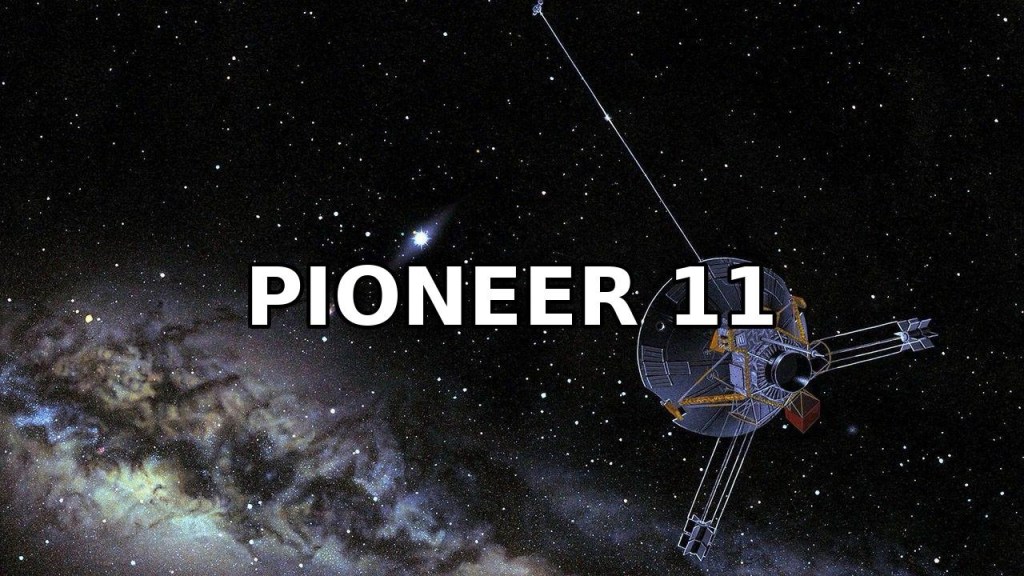
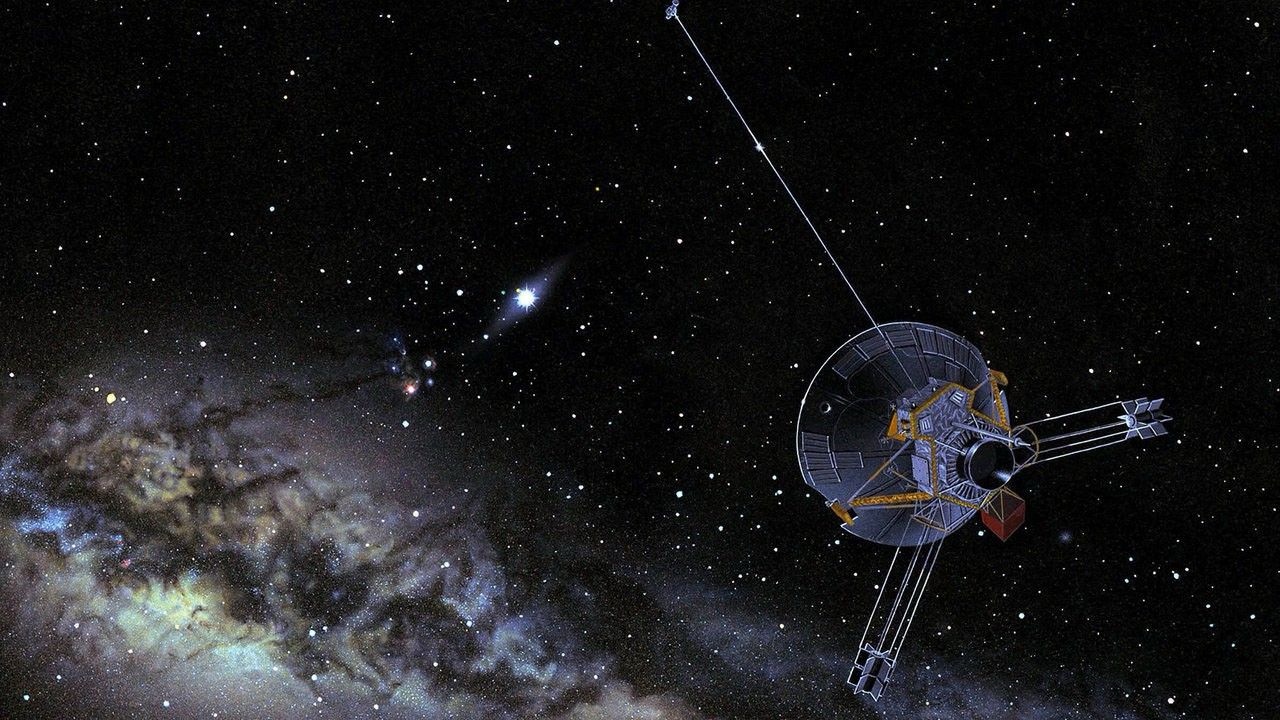
NASA’s Pioneer 11 mission was designed to expand humanity’s understanding of the outer planets and the environment of deep space. Launched on April 6, 1973, from Cape Canaveral, Florida, aboard an Atlas-Centaur rocket, it was the second spacecraft to be sent on a trajectory beyond the asteroid belt. Pioneer 11 followed the success of its predecessor, Pioneer 10, and incorporated improvements to address the scientific challenges of extended space travel.
The spacecraft weighed approximately 260 kilograms (570 pounds) and was equipped with a suite of scientific instruments to collect data during its journey. These instruments included a magnetometer to measure magnetic fields, a charged-particle detector to analyze cosmic radiation, and a photopolarimeter to study the atmosphere and structure of distant planets. In addition, it carried an infrared radiometer to measure temperature variations and a meteoroid detector to assess the density of dust particles in space.
Pioneer 11 was powered by four radioisotope thermoelectric generators (RTGs), which provided a steady supply of electricity by converting heat from the decay of plutonium-238. This energy source was essential for long-duration missions, as solar panels were impractical at the vast distances Pioneer 11 traveled. The spacecraft also utilized an onboard computer system for navigation and data processing, although mission controllers on Earth retained primary control.
One of the most significant milestones of the mission was its trajectory, which allowed it to conduct close flybys of Jupiter and Saturn. After using Jupiter’s powerful gravitational field for a slingshot maneuver, Pioneer 11 became the first spacecraft to visit Saturn, passing within 21,000 kilometers (13,000 miles) of the planet’s cloud tops. This maneuver was carefully planned to optimize the spacecraft’s path while ensuring its instruments could collect meaningful data.



Like its predecessor, Pioneer 11 carried a gold-anodized aluminum plaque featuring a diagram with symbols representing humanity and the spacecraft’s origin. Intended as a message for any extraterrestrial intelligence that might one day encounter it, the plaque included an illustration of a man and a woman, a schematic of the solar system, and a pulsar map indicating Earth’s location in the galaxy.
The spacecraft maintained communication with Earth through a high-gain antenna, designed to relay data across vast distances. As it moved farther from Earth, mission scientists faced challenges in maintaining signal strength, requiring adjustments to ground-based tracking stations to accommodate the weakening transmissions. Despite these challenges, Pioneer 11 continued to send back valuable data until its final transmission in 1995, more than two decades after its launch.
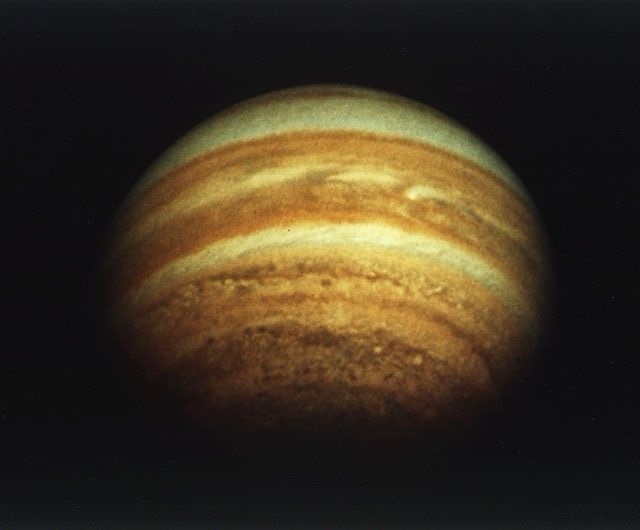
Pioneer 11 contributed significant scientific advancements through its exploration of Jupiter and Saturn. During its encounter with Jupiter in December 1974, the spacecraft provided detailed information about the planet’s magnetosphere, radiation belts, and atmospheric composition. One of its key observations was the detection of Jupiter’s immense magnetic field, which extends millions of kilometers into space. Additionally, Pioneer 11 confirmed the presence of intense radiation surrounding the gas giant, which posed a challenge for future spacecraft navigating the region.
The mission’s historic flyby of Saturn in September 1979 marked the first time a spacecraft had closely approached the ringed planet. The data collected helped refine knowledge about Saturn’s gravity, atmosphere, and rings. Pioneer 11 identified a previously unknown F-ring and provided early evidence of the complex interactions between Saturn’s rings and its moons. The spacecraft also measured the planet’s magnetic field, revealing that it was uniquely aligned with Saturn’s rotational axis, a characteristic that distinguished it from other planetary magnetic fields in the solar system.
Beyond planetary observations, Pioneer 11 contributed valuable insights into the interplanetary and interstellar environment. The spacecraft conducted extensive measurements of cosmic rays and solar wind, improving understanding of the conditions beyond the asteroid belt. It also detected variations in the heliosphere, the region of space influenced by the Sun’s magnetic field, providing early data that would later be expanded upon by Voyager and other deep-space missions.
As one of the first spacecraft to traverse deep space, Pioneer 11 played a role in shaping future missions to the outer planets. Its findings helped guide the trajectory and scientific objectives of later missions, including Voyager 1 and 2, which built upon its discoveries. The spacecraft’s endurance and ability to collect meaningful data long after its primary mission underscored the effectiveness of early deep-space exploration technology.
Even after contact was lost in 1995, Pioneer 11 continued on a trajectory out of the solar system. It is expected to pass near the star Lambda Aquilae in approximately four million years, joining other deep-space probes on their interstellar journeys. Its contributions to space exploration, the study of planetary environments, and the development of interplanetary navigation have left a lasting imprint on the field of space science.
10 Best Selling Books About Planetology
The Planet Factory by Elizabeth Tasker
This book explains how planets form, why planetary systems end up so different from one another, and what exoplanet discoveries reveal about planet formation. It connects modern detection methods with the physical processes that shape planetary composition, atmospheres, and long-term evolution in planetary science.
The Planets by Brian Cox and Andrew Cohen
This book presents a comparative planetology view of the Solar System, using each planet to illustrate how geology, atmospheres, and orbital history interact over time. It frames planetology as a study of processes – volcanism, impacts, climate cycles, and internal structure – rather than isolated worlds.
The New Solar System by J. Kelly Beatty, Carolyn Collins Petersen, and Andrew Chaikin
This reference-style book surveys the modern understanding of the Solar System, emphasizing planetary geology, planetary atmospheres, and the outcomes of robotic exploration. It is structured to help nontechnical readers connect observations from missions with the underlying science that defines planetology.
The Story of Earth by Robert M. Hazen
This book treats Earth as a planetary case study, showing how geology, chemistry, and biology co-evolved and changed the planet’s surface and atmosphere. It supports a planetary science perspective by linking deep-time processes – plate tectonics, mineral evolution, and climate shifts – to broader questions about habitable worlds.
How to Build a Habitable Planet by Charles H. Langmuir and Wally Broecker
This book explains what makes a planet habitable by focusing on planetary interiors, the cycling of water and carbon, and the interactions between atmosphere and surface. It uses Earth science to clarify general rules relevant to planetology, including why climate stability is difficult and why planetary feedback loops matter.
Planets: A Very Short Introduction by David A. Rothery
This concise book outlines the basic tools and concepts of planetary science, including planetary formation, internal structure, and the ways surfaces record geologic history. It provides a clear foundation for understanding planetology as a comparative discipline spanning Mercury through the outer planets and beyond.
Moons: A Very Short Introduction by David A. Rothery
This book focuses on moons as planetary bodies in their own right, covering tidal heating, subsurface oceans, and the geologic diversity seen across the Solar System. It reinforces a modern planetology theme: many of the most dynamic “worlds” are not planets, and their environments help define the boundaries of planetary processes.
Origins: Fourteen Billion Years of Cosmic Evolution by Neil deGrasse Tyson and Donald Goldsmith
This book places planet formation within a broader cosmic timeline, moving from early-universe physics to stars, disks, and the building blocks of planets. It helps readers see how planetology connects to astrophysics and chemistry, especially when explaining why rocky planets and giant planets emerge under different conditions.
Exoplanets by Michael Summers and James Trefil
This book introduces exoplanet science through the practical questions that dominate current planetary research: how planets are detected, how atmospheres are inferred, and what “Earth-like” means in measurable terms. It presents planetology as an evidence-driven field where incomplete data still supports strong inferences about composition, climate, and potential habitability.
The Pluto Files by Neil deGrasse Tyson
This book uses the Pluto debate to explain how scientific classification works and why new data can force changes in planetary definitions. It offers an accessible window into planetology and Solar System science by showing how discovery, measurement, and scientific consensus interact when the boundaries of “planet” are tested.
Today’s 10 Most Popular Science Fiction Books
[amazon bestseller=”science fiction books” items=”10″]


