


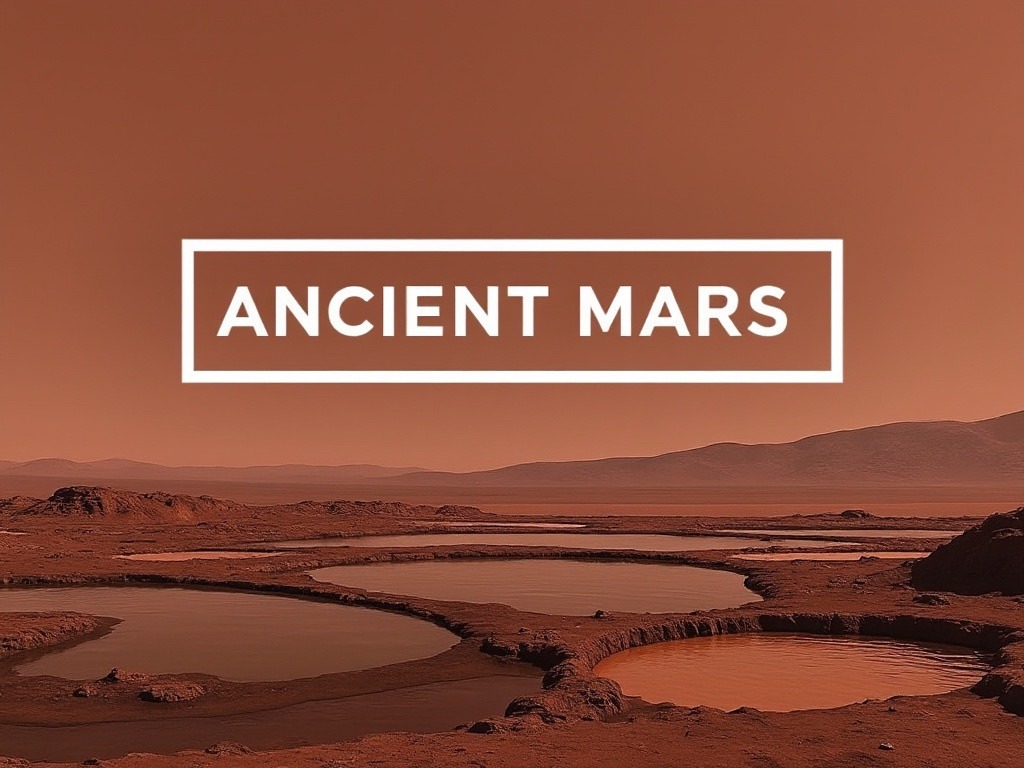
Mars, often referred to as the “Red Planet,” has been the focal point of human curiosity for centuries. Its surface, characterized by vast deserts, towering volcanoes, and deep canyons, offers a tantalizing glimpse into the planet’s geological history. Over the past few decades, Mars exploration missions have provided a wealth of data that paints a picture of a planet that once had an environment strikingly similar to Earth’s. This article explores the ancient environment of Mars, drawing on the latest data from NASA’s exploration missions. The purpose is to provide a comprehensive understanding of Mars’ past, highlighting the geological processes and atmospheric conditions that may have made it a habitable world billions of years ago.
Mars’ Geological History: A Window into the Past
The Formation of Mars
Mars formed approximately 4.6 billion years ago, around the same time as Earth. During its early history, Mars experienced a period of intense bombardment by asteroids and comets, similar to what occurred on Earth and the Moon. This period, known as the Late Heavy Bombardment, significantly shaped the Martian surface, creating many of the craters that are visible today. The planet’s crust formed during this time, and as the impacts subsided, Mars began to develop its own unique geological features.
Volcanism and the Tharsis Region
One of the most striking features of Mars is its extensive volcanic activity, particularly in the Tharsis region. Tharsis is a vast volcanic plateau that covers about a quarter of the Martian surface. It is home to some of the largest volcanoes in the solar system, including Olympus Mons, which stands at a staggering 13.6 miles (22 kilometers) high, nearly three times the height of Mount Everest.
Volcanism played a significant role in shaping Mars’ environment during its early history. The massive outpourings of lava from these volcanoes likely contributed to the planet’s early atmosphere, releasing gases such as carbon dioxide, water vapor, and sulfur dioxide. These gases would have created a thick, insulating atmosphere, which could have supported liquid water on the surface.
The Role of Water: Evidence from Ancient River Valleys and Lake Beds
One of the most important discoveries in Mars exploration has been the evidence of ancient water flow on the planet’s surface. Numerous features, such as dried-up river valleys, deltas, and lake beds, suggest that Mars once had a significant amount of liquid water. The most famous of these features is the Valles Marineris, a vast canyon system that stretches over 2,500 miles (4,000 kilometers) across the Martian surface. This canyon, which is more than four times longer than the Grand Canyon on Earth, is believed to have been carved by water flowing through the region billions of years ago.
NASA’s Curiosity rover, which has been exploring the Gale Crater since 2012, has provided compelling evidence that the crater once contained a large lake. The sediments analyzed by Curiosity suggest that the lake persisted for millions of years, providing a stable environment that could have supported microbial life. Additionally, the presence of hydrated minerals, such as clays and sulfates, further supports the idea that water was once abundant on Mars.
The Noachian Period: A Time of Significant Climate Change
The Noachian period, which lasted from about 4.1 to 3.7 billion years ago, was a time of significant climate change on Mars. During this period, the planet experienced widespread volcanic activity, which likely contributed to a warmer and wetter climate. The thick atmosphere, rich in greenhouse gases, would have allowed liquid water to exist on the surface for extended periods.
The evidence for this warmer climate comes from the extensive network of valley networks and outflow channels that crisscross the Martian surface. These features suggest that liquid water was not only present but was also flowing across the surface, eroding the landscape and depositing sediments. The presence of these features indicates that Mars’ climate during the Noachian period was vastly different from the cold and dry conditions that exist today.
The Hesperian Period: The Decline of Mars’ Atmosphere
Following the Noachian period, Mars entered the Hesperian period, which lasted from about 3.7 to 3 billion years ago. During this time, the planet’s climate began to change, becoming colder and drier. The volcanic activity that had once dominated the planet began to wane, and the atmosphere started to thin.
One of the most significant changes during the Hesperian period was the loss of Mars’ magnetic field. Unlike Earth, which has a strong magnetic field generated by the movement of molten iron in its core, Mars’ magnetic field weakened and eventually disappeared. This loss of protection left the planet vulnerable to the solar wind, a stream of charged particles from the Sun, which began stripping away the atmosphere.
As the atmosphere thinned, the surface pressure dropped, making it increasingly difficult for liquid water to exist. The once-thick atmosphere that had supported lakes, rivers, and perhaps even oceans began to dissipate, leading to the cold, arid conditions that characterize Mars today.
Mars’ Atmosphere: Insights from NASA’s MAVEN Mission
Understanding Mars’ Atmospheric Loss
The Mars Atmosphere and Volatile EvolutioN (MAVEN) mission, launched by NASA in 2013, has provided critical insights into how Mars lost its atmosphere. MAVEN’s primary goal is to study the upper atmosphere of Mars and the processes that led to the planet’s atmospheric loss over time.
MAVEN’s data has shown that the solar wind played a significant role in stripping away Mars’ atmosphere. The spacecraft observed that the solar wind interacts with the upper atmosphere, energizing particles and causing them to escape into space. This process has been ongoing for billions of years, gradually reducing the thickness of the atmosphere and leading to the cold, dry environment we see today.
The Composition of Mars’ Ancient Atmosphere
While Mars’ atmosphere is now thin and composed mostly of carbon dioxide, evidence suggests that it was once much thicker and more Earth-like. During its early history, Mars likely had a dense atmosphere composed of carbon dioxide, water vapor, and other gases. This thick atmosphere would have created a greenhouse effect, trapping heat and allowing liquid water to exist on the surface.
Data from the Curiosity rover and other missions have provided clues about the composition of Mars’ ancient atmosphere. For example, the presence of certain isotopes in the Martian atmosphere suggests that it was once much thicker and capable of supporting a stable climate. Additionally, the detection of methane in the atmosphere, although still a topic of debate, hints at the possibility of past or present biological activity.
The Search for Ancient Life on Mars
The Potential for Habitability
One of the most compelling questions in Mars exploration is whether the planet could have supported life in the past. The discovery of ancient water flow, combined with evidence of a thicker atmosphere, suggests that Mars may have had conditions suitable for life billions of years ago.
NASA’s Perseverance rover, which landed on Mars in 2021, is specifically designed to search for signs of ancient life. The rover is exploring the Jezero Crater, an area believed to have once contained a large lake. Perseverance is collecting rock and soil samples, looking for organic molecules and other potential biosignatures that could indicate the presence of past life.
Biosignatures and the Challenges of Detection
Detecting signs of past life on Mars is a challenging task, given the planet’s harsh environment and the potential for degradation of organic material over billions of years. However, scientists are optimistic that Perseverance and future missions could find evidence of ancient life, if it existed.
Biosignatures, which are indicators of past or present life, can take many forms. On Earth, they include organic molecules, certain types of minerals, and specific patterns in rock formations. On Mars, finding these biosignatures would require careful analysis of the rock and soil samples, as well as an understanding of the planet’s geological history.
One of the key challenges in searching for biosignatures on Mars is distinguishing between biological and non-biological processes. For example, certain minerals can form through both biological and geological processes, making it difficult to determine their origin. As a result, scientists must use a combination of techniques and instruments to identify potential signs of life.
Future Missions and the Search for Life
The search for life on Mars is far from over. NASA and other space agencies are planning future missions that will build on the discoveries made by Perseverance and other rovers. One of the most anticipated missions is the Mars Sample Return, which aims to bring samples collected by Perseverance back to Earth for detailed analysis.
By studying these samples in laboratories on Earth, scientists hope to find definitive evidence of past life on Mars. Additionally, future missions could explore other regions of Mars that may have been habitable in the past, such as subsurface environments where water could still exist.
Mars’ Ancient Climate: A Comparison with Earth
Similarities Between Early Mars and Early Earth
One of the most intriguing aspects of Mars’ ancient environment is how it compares to early Earth. Both planets formed around the same time and experienced similar processes during their early history, such as heavy bombardment, volcanic activity, and the presence of liquid water.
During the Noachian period, Mars’ climate may have been similar to that of early Earth, with a thick atmosphere, warm temperatures, and abundant water. This has led to speculation that life could have emerged on Mars around the same time it appeared on Earth.
However, while Earth developed a stable climate and a protective magnetic field, Mars’ environment began to deteriorate. The loss of its magnetic field and the subsequent atmospheric loss transformed Mars into the cold, dry planet we see today, while Earth continued to support life.
Differences in Atmospheric Evolution
One of the key differences between Mars and Earth is their atmospheric evolution. Earth has maintained a thick atmosphere, thanks in part to its strong magnetic field, which protects it from the solar wind. This has allowed Earth to sustain liquid water and a stable climate for billions of years.
In contrast, Mars’ atmosphere began to thin during the Hesperian period, leading to the loss of surface water and a drastic change in climate. The absence of a magnetic field left Mars vulnerable to atmospheric loss, ultimately transforming the planet into a frozen desert.
What Mars Can Teach Us About Earth’s Future
Studying Mars’ ancient climate and atmospheric evolution provides valuable insights into the future of Earth. While Earth’s magnetic field currently protects its atmosphere from the solar wind, this may not always be the case. Understanding how Mars lost its atmosphere can help scientists predict how Earth’s atmosphere might evolve over billions of years and what factors could influence its stability.
Additionally, studying Mars’ climate history can provide clues about the conditions necessary for life to exist on other planets. By comparing Mars’ ancient environment with Earth’s, scientists can develop models for identifying potentially habitable worlds beyond our solar system.
Summary
NASA’s exploration of Mars has revealed a planet with a rich geological history and an ancient environment that was once strikingly similar to Earth’s. Mars’ surface features, such as river valleys, lake beds, and volcanoes, suggest that the planet had a thick atmosphere and abundant liquid water billions of years ago. The Noachian period, in particular, was a time of significant climate change, with warmer temperatures and flowing water shaping the Martian landscape.
However, as Mars lost its magnetic field and its atmosphere thinned, the planet’s climate shifted, leading to the cold and arid conditions we see today. NASA’s MAVEN mission has provided important insights into how Mars’ atmosphere was stripped away by the solar wind, further highlighting the planet’s dramatic transformation.
The search for ancient life on Mars continues, with missions like Perseverance exploring areas that may have once been habitable. The discovery of biosignatures could provide definitive evidence of past life, shedding light on one of the most important questions in planetary science.
Mars’ ancient environment offers a glimpse into the past and provides valuable lessons for understanding Earth’s future. As exploration continues, the Red Planet will remain a key focus in the quest to unravel the mysteries of our solar system and the potential for life beyond Earth.


