- A New Era in Low-Earth Orbit
- The Starlab Space Venture: A Global Consortium
- Architectural Design and Station Specifications
- Technological Foundation and Advanced Systems
- The Human Experience: Living and Working Aboard Starlab
- A Hub for Science and Commerce
- Market Positioning and the Competitive Landscape
- Development Roadmap and Future Outlook
- Summary
A New Era in Low-Earth Orbit
The landscape of human activity in space is undergoing a fundamental transformation. For over two decades, the International Space Station (ISS) has served as the primary outpost for humanity in low-Earth orbit (LEO), a monumental achievement of global cooperation and scientific exploration. However, the ISS is approaching the end of its operational life, with its decommissioning planned for around 2030. The station’s aging hardware and substantial operational costs have prompted NASA to architect a new, more sustainable path forward for its activities in LEO. This has created an urgent and strategic need for a new generation of orbital platforms to ensure that the United States and its international partners maintain a continuous human presence in this vital region, particularly as other nations advance their own space station programs.
To address this impending transition, NASA initiated the Commercial Low-Earth Orbit Destinations (CLD) program in March 2021. This program marks a deliberate and shift in the agency’s operational philosophy. Instead of owning and operating space infrastructure itself, NASA is positioning itself to become one of many customers in a vibrant, competitive commercial marketplace. Through funded Space Act Agreements, the agency is actively stimulating the private sector to develop, launch, and operate commercial space stations. This approach is designed to lower costs for the U.S. government, foster innovation, and free NASA‘s resources to focus on its deep-space exploration objectives under the Artemis program, which includes missions to the Moon and Mars.
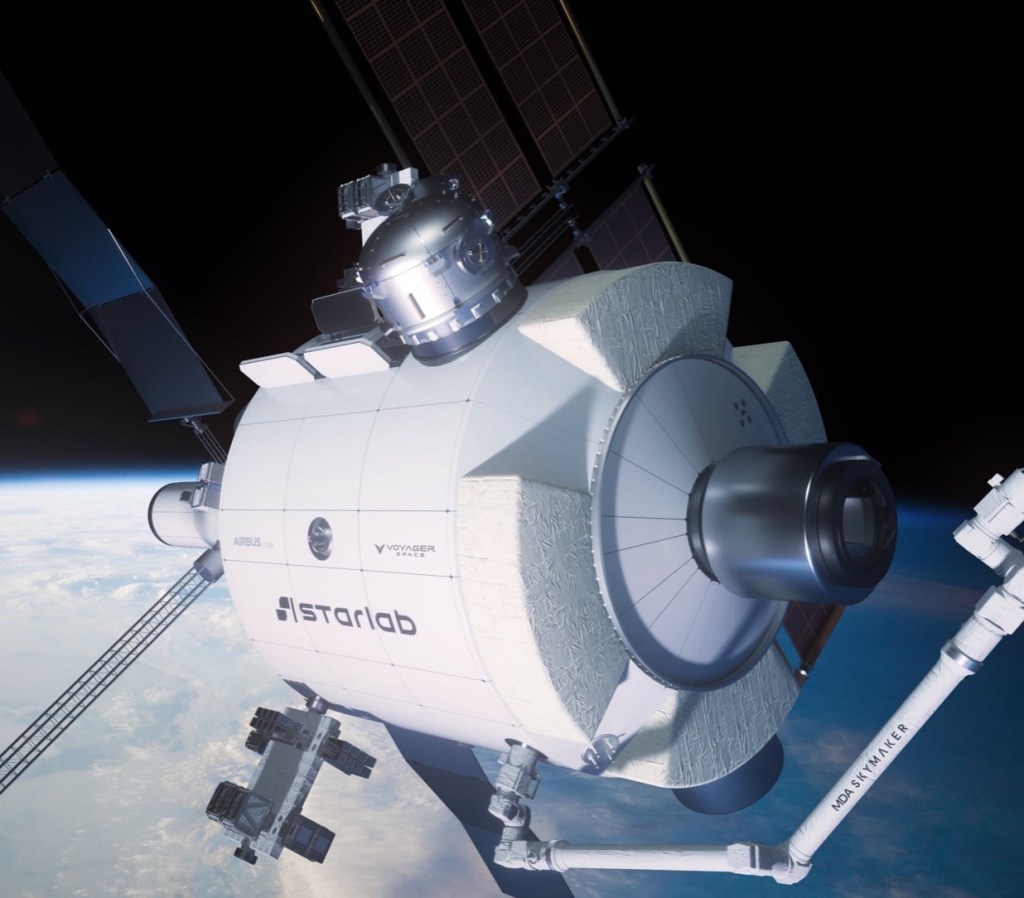
Starlab is a direct and leading response to this government-created market opportunity. It is a commercial space station being developed specifically to provide a seamless transition of microgravity research, science, and commerce from the ISS into this new commercial era. The project’s mission extends beyond simply replacing a piece of hardware; it is conceived as the foundational infrastructure for a new, self-sustaining commercial ecosystem orbiting 400 kilometers above the Earth. Starlab’s success is intrinsically linked to NASA‘s commitment to this commercialization strategy, creating a symbiotic relationship where NASA requires a viable commercial platform to achieve its policy goals, and Starlab needs NASA as an anchor tenant to ensure its commercial viability.
The Starlab Space Venture: A Global Consortium
The development and future operation of the Starlab station are managed by Starlab Space LLC, a U.S.-led, transatlantic joint venture that brings together an array of international aerospace leaders. The project’s origins trace back to an October 2021 proposal from Nanoracks, a subsidiary of Voyager Space, and aerospace giant Lockheed Martin. The venture underwent a significant strategic evolution when European aerospace conglomerate Airbus joined and eventually replaced Lockheed Martin in the partnership, a move that transformed the project into a deeply integrated international collaboration.
Core Partners and Equity Holders
The Starlab Space joint venture is built upon a foundation of four cornerstone partners, each an equity holder bringing decades of proven flight heritage and specific capabilities derived directly from their experience with the International Space Station. The composition of this consortium is a deliberate commercial reconstruction of the ISS’s core international partnership, a strategic decision designed to secure global market access, build upon existing political and industrial relationships, and create a powerful competitive advantage.
- Voyager Space (United States): As the majority shareholder and U.S. lead, Voyager Space anchors the venture. Through its subsidiary Nanoracks, Voyager brings more than a decade of direct experience as the leading commercial user of the ISS, providing a deep understanding of payload integration, mission management, and the business of on-orbit science.
- Airbus (Europe): A founding partner in the joint venture, Airbus is responsible for the technical design, engineering, and manufacturing of the Starlab habitat module. The company’s extensive human spaceflight expertise is drawn from its role in developing and building critical ISS components like the Columbus Module and the Automated Transfer Vehicle (ATV), as well as the European Service Module (ESM) that provides power and propulsion for NASA’s Orion spacecraft.
- Mitsubishi Corporation (Japan): The Japanese conglomerate joined the venture as a strategic partner and equity owner in April 2024. Mitsubishi’s role is to leverage its vast industrial network and resources to expand market access for Starlab, particularly for the Japanese space economy. It will also work to accelerate the development of terrestrial products by utilizing the unique research environment that Starlab will offer.
- MDA Space (Canada): A global leader in space robotics, MDA Space became a strategic partner and equity owner in May 2024. As the developer of the iconic Canadarm family of robotics used on both the Space Shuttle and the ISS, MDA Space will provide Starlab’s complete external robotics systems, interfaces, and mission operations support.
Strategic Teaming and Key Suppliers
Beyond the core joint venture partners, Starlab Space has forged a crucial strategic agreement with Northrop Grumman. After deciding to discontinue its own commercial space station project, Northrop Grumman joined the Starlab team to provide cargo resupply services. Under an initial five-year agreement, Northrop Grumman will use its Cygnus spacecraft to deliver supplies to the station, and is developing a fully autonomous rendezvous and docking system specifically for these missions.
Financial Backing
The Starlab project is supported by significant public and private investment. It was awarded a $217.5 million funded Space Act Agreement from NASA as part of the CLD program. It has also received a $15 million grant from the Texas Space Commission’s Space Exploration and Aeronautics Research Fund. This government funding is complemented by substantial financial commitments from the joint venture partners themselves.
Architectural Design and Station Specifications
Starlab is distinguished by an innovative architectural philosophy that prioritizes efficiency, speed of deployment, and operational simplicity. Its design has evolved from early concepts to a robust, next-generation platform intended for a long operational life in the harsh environment of space.
A Single-Launch Philosophy
The most defining characteristic of the Starlab station is its “no assembly required” deployment strategy. The entire station—comprising the integrated habitat and service modules—is designed to be fully manufactured, assembled, and outfitted with its core systems on the ground. It will then be launched as a single, complete unit aboard SpaceX‘s Starship super-heavy launch vehicle. This approach stands in stark contrast to the complex, multi-year, and multi-launch on-orbit assembly process that was required to build the International Space Station.
This single-launch architecture is a high-risk, high-reward strategic choice. It is intended to dramatically reduce the cost, technical complexity, and operational risks associated with on-orbit construction. By eliminating the need for numerous launches and intricate robotic or astronaut-led assembly tasks in space, Starlab is expected to become fully operational within just a few weeks of reaching its orbital destination. However, this entire strategy is contingent upon the operational readiness and reliability of SpaceX‘s Starship, as it is currently the only launch vehicle in development with a payload fairing large enough to accommodate Starlab’s 8-meter diameter. This creates a critical dependency, tying the fate of the Starlab project directly to the success of the Starship program.
From Inflatable Concepts to a Rigid Steel Structure
The station’s design underwent a significant evolution during its early development. The initial concept proposed by Nanoracks and Lockheed Martin featured a large inflatable habitat module, a technology that offers the potential for large pressurized volumes in a compact launch configuration. However, this concept was later abandoned.
The current and final design features a rigid, metallic habitat module with a steel case, which will be manufactured by Airbus. This change was reportedly driven by a desire to utilize a more mature and flight-proven technology for the station’s primary crewed module. By opting for a rigid structure, the Starlab team prioritized the highest levels of safety, reliability, and structural integrity for a platform designed to operate for three decades.
Core Components
The Starlab station consists of two main elements that will be launched as a single, integrated spacecraft:
- Habitat and Laboratory Module: This is the main body of the station, a large, single pressurized volume with a diameter of approximately 8 meters (26 feet). This is nearly double the diameter of the primary modules of the ISS, providing a spacious interior. This module will contain the crew’s living quarters, the primary laboratory and research facilities, and multiple docking ports for visiting crew and cargo vehicles.
- Service Module: Attached to the habitat module is a smaller, compact service module. This unpressurized section serves as the station’s utility hub, housing the power generation systems, including the solar arrays, and the propulsion systems required for orbital maintenance and attitude control.
Starlab Technical Specifications
The following table consolidates the key technical specifications of the Starlab space station, providing a concise overview of its scale and capabilities.
| Parameter | Specification |
|---|---|
| Primary Structure | Single rigid metallic module (Habitat/Lab) with attached Service Module |
| Module Diameter | ~8 meters (26+ feet) |
| Pressurized Volume | Approximately half the volume of the ISS; initial designs cited 340 m³ (12,000 ft³) |
| Crew Capacity | 4 astronauts (continuous); 8 astronauts (temporary, during crew rotation) |
| Operational Altitude | ~400 km (Low-Earth Orbit) |
| Power Generation | 60 kW via solar arrays |
| Launch Vehicle | SpaceX Starship |
| Launch Strategy | Single launch, fully integrated |
| Design Life | 30 years |
Technological Foundation and Advanced Systems
Starlab is being engineered as a “smart station,” where advanced digital technologies, artificial intelligence, and robotics are not merely add-ons but are fundamentally integrated into its core operational philosophy. This digital-first approach is a deliberate strategy to maximize automation, enhance safety, and improve operational efficiency, aiming to reduce the long-term crew workload and operational costs that were significant challenges for the ISS.
The AI-Powered Station: Palantir’s Digital Twin
A key element of Starlab’s advanced design is its designation as a next-generation, AI-enabled platform. Starlab Space has established a strategic partnership with Palantir Technologies, which will serve as the exclusive supplier of enterprise-wide software and data management solutions for the station. This collaboration will infuse Starlab’s operations with cutting-edge AI and data analytics capabilities.
- Digital Twin: At the heart of this partnership is the creation of a high-fidelity “digital twin” of the Starlab station. This is a virtual model that will be continuously updated with real-world data. On the ground, this digital twin will be used to simulate complex scenarios, optimize the allocation of critical resources like power, water, and air, and meticulously plan missions before they are ever executed in space.
- Predictive Maintenance: AI algorithms will constantly analyze real-time data streams from thousands of sensors across the station. By identifying subtle anomalies and usage patterns, this system will be able to predict potential equipment failures before they occur. This predictive maintenance capability is intended to extend the lifespan of critical components, reduce the need for costly unplanned repairs, and significantly improve the overall reliability and safety of station operations.
- Ground Predictive Processing: The station’s AI capabilities will also be applied to its scientific mission. The system will be used to model the microgravity environment, allowing researchers to optimize their experiment designs and conduct pre-launch analysis to increase the probability of success once their payloads are on orbit.
Robotics by MDA Space
Reflecting its Canadian partnership, Starlab will be equipped with a state-of-the-art external robotics system provided by MDA Space. Drawing on its unparalleled heritage with the Space Shuttle’s Canadarm and the ISS’s Canadarm2, MDA will supply the full suite of robotics, including robotic arms, interfaces, and mission operations support.
- MDA SKYMAKER™: Starlab will be one of the first customers for MDA’s new commercial robotics product line, MDA SKYMAKER™. This modular and scalable system is derived from decades of flight-proven technology but is designed specifically for the commercial space market.
- Robotics Functions: The robotic arm will be integral to daily station operations. It will be used for a wide range of external tasks, including handling and installing scientific payloads, performing routine maintenance and inspections, and assisting with the capture and berthing of visiting cargo vehicles. This level of robotic capability will reduce the reliance on complex and risky astronaut spacewalks.
Life Support and Power Systems
Designed for a service life of 30 years, Starlab requires robust and highly reliable core systems to sustain its crew and operations.
- Power System: The station will be equipped with a powerful 60-kilowatt power and propulsion element. This system will be fed by large, advanced solar arrays that will generate ample electricity to support all station subsystems, a full suite of scientific experiments, and the needs of a four-person crew.
- Life Support System: Starlab will feature a regenerative Environmental Control and Life Support System (ECLSS). A key component of this is an Advanced Urine Processor, which will recycle wastewater to provide clean water for the crew. This technology, which is more compact and reliable than previous systems, is being tested on the ISS as a demonstration mission to validate its performance for future use on Starlab.
Logistics and Resupply
To keep the station stocked with supplies, scientific equipment, and other cargo, Starlab Space has a strategic teaming agreement with Northrop Grumman. This agreement covers cargo resupply missions for an initial five-year period using the company’s proven Cygnus spacecraft. To support these missions, Northrop Grumman is developing a fully autonomous rendezvous and docking capability, which will allow Cygnus to approach and connect with Starlab without assistance from the station’s robotic arm or crew.
The Human Experience: Living and Working Aboard Starlab
One of the most distinctive aspects of the Starlab project is its focus on the human element. Moving beyond purely functional engineering, the venture is integrating expertise from the hospitality industry to create an orbital habitat that prioritizes the psychological and physical well-being of its crew. This “human-first” approach is not just an amenity but a core feature designed to maximize crew performance, productivity, and mission success, making it a highly marketable asset for both government and commercial customers.
Designing for Astronauts
The Starlab team is employing a rigorous design process centered on Human Systems Integration (HSI) and Human Factors Testing. This discipline seeks to optimize the internal layout of the station to enhance both operational efficiency and the overall crew experience. Decades of data from long-duration missions aboard the ISS and Mir have shown that factors like isolation, confinement, poor sleep, and a lack of privacy can lead to crew tension and reduced productivity. Starlab’s design directly addresses these known challenges.
To achieve this, the team has constructed full-scale, high-fidelity mockups of the station’s interior. These mockups are used for “Human-in-the-Loop” (HITL) testing, where astronauts—including experienced crew from the European Space Agency—live and work within the simulated space. This process allows designers to gather direct, invaluable feedback on everything from the placement of science racks and control panels to the flow of traffic through communal areas and the comfort of the sleeping quarters. This iterative, user-centric approach ensures the final design is not only operationally sound but also intuitive and comfortable for its inhabitants.
Hospitality in Orbit: Hilton’s Contribution
In a groundbreaking partnership for the space industry, Starlab Space has teamed with Hilton Hotels to apply a century of hospitality expertise to the design of an orbital habitat. This collaboration is a direct and novel attempt to solve the human factors challenges of long-duration spaceflight. Instead of astronauts simply adapting to a purely functional laboratory, Starlab is being engineered to actively support their mental and physical health.
- Scope of the Partnership: Hilton’s world-renowned design and innovation experts are deeply involved in developing the crew headquarters aboard Starlab. Their influence extends to the design of communal areas, hospitality suites, and the personal sleeping arrangements for the astronauts.
- Design Elements: The interior design revealed in concept videos showcases a focus on astronaut well-being. This includes spacious and inviting communal areas for dining and relaxation to foster a sense of community, dedicated wellness spaces with exercise equipment to counter the effects of microgravity, and advanced private sleeping quarters designed to provide a comfortable and restful environment. The design also incorporates large windows, providing astronauts with expansive views of Earth, a feature known to be a significant morale booster.
- A Holistic Experience: The partnership between Starlab and Hilton extends beyond just the on-orbit habitat. The teams are also exploring the entire ground-to-space astronaut experience, from pre-flight training and preparation to post-mission recovery, aiming to infuse every stage of the journey with the comfort and reliability for which Hilton is known. This collaboration also includes exploring opportunities for global co-marketing and branding, positioning Starlab for a future that may include space tourism.
A Hub for Science and Commerce
Starlab is being developed not just as a habitat but as a world-class, state-of-the-art laboratory in orbit. The venture is building its future customer base from the ground up by creating an integrated terrestrial and orbital research ecosystem. This model is designed to lower the barrier to entry for new users and cultivate a global community of researchers who will become the station’s long-term clients.
The George Washington Carver (GWC) Science Park
The heart of Starlab’s research ecosystem is the George Washington Carver (GWC) Science Park. This is the first-of-its-kind science park dedicated to in-space research and manufacturing, with its U.S. headquarters and terrestrial analog facilities located at The Ohio State University.
- A Seamless Research Pipeline: The GWC Science Park is designed to function as a “one-stop shop” for space research. It provides a ground-based hub where scientists and engineers can develop their experiments, build and test their hardware in analog facilities that simulate the space environment, integrate their payloads, and receive training. This creates a seamless Earth-to-space research pipeline, allowing organizations to de-risk their projects on the ground before making the significant investment in a spaceflight mission.
- Research Focus and Partners: The park fosters deep collaboration between academia, government, and industry. Its research is focused on key areas with high potential for commercial breakthroughs in microgravity, including agriculture and controlled environment agriculture (AgriTech), bioastronautics (human health in space), and advanced materials science and manufacturing. The GWC Science Park is already an active entity, managing research on the ISS to build its user community today. It has attracted a growing network of partners, including the UK-based Blue Abyss, which specializes in extreme environment testing, and the Ohio-based Nexture Bio, which is focused on cellular agriculture.
On-Orbit Research Capabilities
Once operational, the Starlab station itself will be a highly capable laboratory able to support more than 400 experiments and technical investigations per year. Its large internal volume and significant power budget will provide ample resources for a wide array of scientific pursuits. The platform is being designed to serve a diverse range of commercial and scientific markets, with a particular focus on industries that can uniquely benefit from the microgravity environment. These include:
- Biopharma and Life Sciences: Research into protein crystallization, drug development, and stem cell proliferation, where the absence of gravity can lead to higher-quality results and new discoveries.
- Advanced Materials: The development of novel alloys, composites, and fiber optics that are difficult or impossible to produce in Earth’s gravity.
- Semiconductor Manufacturing: Exploring the potential for manufacturing higher-quality semiconductor crystals and thinner layering in the vacuum of space, which could lead to more powerful and efficient electronic chips.
Global Research Infrastructure
The Starlab research network is a global endeavor, mirroring the international nature of the joint venture itself. The GWC Science Park at The Ohio State University serves as the U.S. hub of this network. It is complemented by a European hub located at the Switzerland Innovation Park Zurich, and Starlab Space is actively exploring the establishment of additional sites in Japan. This global infrastructure is designed to integrate international expertise and strengthen the research and development pipeline for users around the world.
Market Positioning and the Competitive Landscape
As the era of the International Space Station draws to a close, a new and competitive market for commercial LEO destinations is emerging. Starlab is positioned as one of the leading contenders in this race, but it is pursuing a distinct strategy that differentiates it from its primary competitors. Its approach is to be a free-flying, independent station from its first day in orbit, offering a “turnkey” solution for science and research.
Starlab in the Commercial LEO Ecosystem
The development of Starlab is taking place within the framework of NASA’s Commercial LEO Development (CLD) program, which is intentionally fostering a competitive marketplace with multiple providers. This landscape is currently defined by three major, well-funded concepts, each with a different approach to building and operating a space station.
- Axiom Station: Led by Axiom Space, this project is pursuing a modular and incremental deployment strategy. Axiom’s plan begins with launching its own modules to first attach to the International Space Station, thereby expanding the ISS’s capabilities while proving out its hardware. Upon the ISS’s retirement, these modules are designed to detach and become a fully independent, free-flying commercial station. This approach cleverly leverages existing space infrastructure and reduces initial risk but is inherently tied to the ISS and its operational timeline.
- Orbital Reef: This ambitious project is led by a partnership between Blue Origin and Sierra Space, with significant contributions from Boeing and other aerospace companies. Orbital Reef is envisioned as a large, modular “mixed-use business park” in space. It is designed for significant scale and expandability over time, catering to a diverse range of tenants that could include national space agencies, manufacturing firms, and space tourism operators. Its grand scale and complexity require the coordination of a wide array of partners and a multi-launch assembly campaign.
- Starlab’s Differentiating Strategy: Starlab sets itself apart with its single-launch, all-in-one architecture. It is not designed to be the largest station, nor does it depend on attaching to the ISS. Instead, its value proposition is centered on speed, simplicity, and operational independence. By launching as a complete, fully tested station, it plans to be available to customers quickly and without the complexities of on-orbit construction. Its focused design as a dedicated science and research platform, combined with its human-centric interior, may also appeal to customers who prefer a self-contained environment, such as a single nation conducting a sovereign astronaut program or a corporation performing sensitive, proprietary research.
Commercial LEO Station Comparison
The following table provides a side-by-side comparison of the core strategies and features of the leading commercial space station concepts.
| Feature | Starlab (Voyager/Airbus) | Axiom Station (Axiom Space) | Orbital Reef (Blue Origin/Sierra Space) |
|---|---|---|---|
| Deployment Strategy | Single-launch, free-flying station | Modular; attach to ISS first, then separate | Modular, free-flying station built in orbit over time |
| Core Structure | Single 8m-diameter rigid metallic module | Multiple 4.2m-diameter rigid modules | Multiple large-diameter core modules and expandable LIFE habitats |
| Key Partners | Voyager, Airbus, Mitsubishi, MDA Space, Northrop Grumman, Palantir, Hilton | Thales Alenia Space (module manufacturing), SpaceX (crew/cargo transport) | Blue Origin, Sierra Space, Boeing, Redwire Space, Genesis Engineering |
| Operational Philosophy | “Turnkey” science & research platform with a focus on human factors and AI-driven efficiency | Incremental expansion of LEO capabilities, leveraging ISS heritage and access | Large, scalable “mixed-use business park” for diverse commercial tenants |
| Launch Vehicle(s) | SpaceX Starship (exclusive) | Various (e.g., Falcon 9) | New Glenn, Vulcan Centaur |
Development Roadmap and Future Outlook
The Starlab program is operating on a high-velocity development timeline, driven by the hard deadline of the ISS’s retirement at the end of the decade. Its progress is marked by a series of rigorous, NASA-collaborated reviews designed to mature the station’s design and de-risk its development ahead of manufacturing and launch.
Key Milestones Achieved
The Starlab project has successfully navigated several critical development gates, demonstrating substantial progress and technical maturity.
- Systems Requirements Review (SRR): This review was successfully completed in mid-2023. In collaboration with NASA, the Starlab team validated the station’s top-level functional, technical, performance, and security requirements, ensuring the conceptual design was sound and aligned with its mission objectives.
- Preliminary Design Review (PDR): A major program milestone, the PDR was successfully completed in early 2025. This intensive review, conducted with an expert panel from NASA and the project’s partners, confirmed that the station’s architecture and systems are technically sound and safe for crewed operations. The successful completion of the PDR, along with an accompanying Phase 1 safety review, formally cleared the project to move from design into full-scale development and hardware production.
The Path to Launch
With the design phase largely complete, the Starlab project has now entered the detailed design and hardware manufacturing phase. The next few years will be a period of intense activity focused on building and testing the systems that will fly in space.
- Hardware Development and Testing: The team is currently procuring long-lead-time materials for critical subsystems and has begun the construction of Engineering Design Units and protoflight hardware. A System Integration Lab (SIL) is being established in Texas to serve as the central hub for testing all of the station’s avionics, computing, sensors, and software. In Bremen, Germany, facilities are being expanded to support the assembly, integration, and testing of the habitat module.
- High-Fidelity Mockup: A full-scale, high-fidelity mockup of the station’s interior is being assembled at NASA’s Johnson Space Center in Houston. This mockup will be used for extensive systems testing and to support astronaut training for future missions.
- Critical Design Review (CDR): The next major programmatic gate for the Starlab program is the Critical Design Review, which is scheduled for late 2025. This review will be the final technical assessment of the station’s design before the team commits to manufacturing the flight article.
- Launch Target: The launch of the fully integrated Starlab space station aboard a SpaceX Starship is currently targeted for 2028.
The Long-Term Vision
The ultimate goal for Starlab and its partners extends far beyond simply replacing the ISS. The long-term vision is for the station to serve as a vital and enduring cornerstone of a sustainable, multi-user commercial economy in low-Earth orbit. With a design life of 30 years, Starlab is intended to operate long after its initial NASA service contracts are fulfilled. It will serve a global customer base that includes national space agencies, academic researchers, and a wide range of commercial companies. By providing continuous and reliable access to the unique environment of space, the venture seeks to drive scientific discoveries and technological advancements that can transform humanity, both on Earth and in our exploration of the cosmos.
Summary
Starlab represents a pivotal development in the future of human spaceflight, emerging as a leading contender to succeed the International Space Station and anchor a new commercial economy in low-Earth orbit. It is the product of Starlab Space LLC, a U.S.-led global joint venture that strategically reunites the core international partners of the ISS—the United States (Voyager Space), Europe (Airbus), Japan (Mitsubishi Corporation), and Canada (MDA Space)—in a commercial framework. This powerful consortium is developing a continuously crewed, free-flying platform designed to provide a seamless transition for microgravity research and commerce.
The station’s architecture is defined by its innovative single-launch strategy. The entire station will be fully assembled and integrated on the ground and launched as a single unit on a SpaceX Starship, a high-reward approach intended to drastically reduce cost, risk, and deployment time compared to traditional modular assembly. The station itself consists of a large, 8-meter-diameter rigid metallic habitat and laboratory module, providing a spacious environment for a crew of four astronauts, and an attached service module for power and propulsion.
Technologically, Starlab is being engineered as a next-generation “smart station.” It will be equipped with an advanced external robotics system from MDA Space and will be the first AI-enabled space station, leveraging a partnership with Palantir to create a comprehensive digital twin for predictive maintenance and optimized operations. In a unique collaboration with Hilton, the station’s interior is being designed with a human-first philosophy, focusing on crew comfort and psychological well-being to maximize performance during long-duration missions.
Starlab’s commercial strategy is anchored by the George Washington Carver Science Park, a terrestrial research hub at The Ohio State University that creates a seamless Earth-to-space pipeline for scientists and commercial users. By cultivating this research community on the ground today, Starlab is actively building the market for its future on-orbit services. Positioned against competitors like the modular Axiom Station and the expansive Orbital Reef, Starlab offers a distinct value proposition as an agile, independent, and rapidly deployable platform. With key design reviews successfully completed and a launch targeted for 2028, Starlab is on a high-velocity path to become a central pillar of the post-ISS era in low-Earth orbit.