As an Amazon Associate we earn from qualifying purchases.
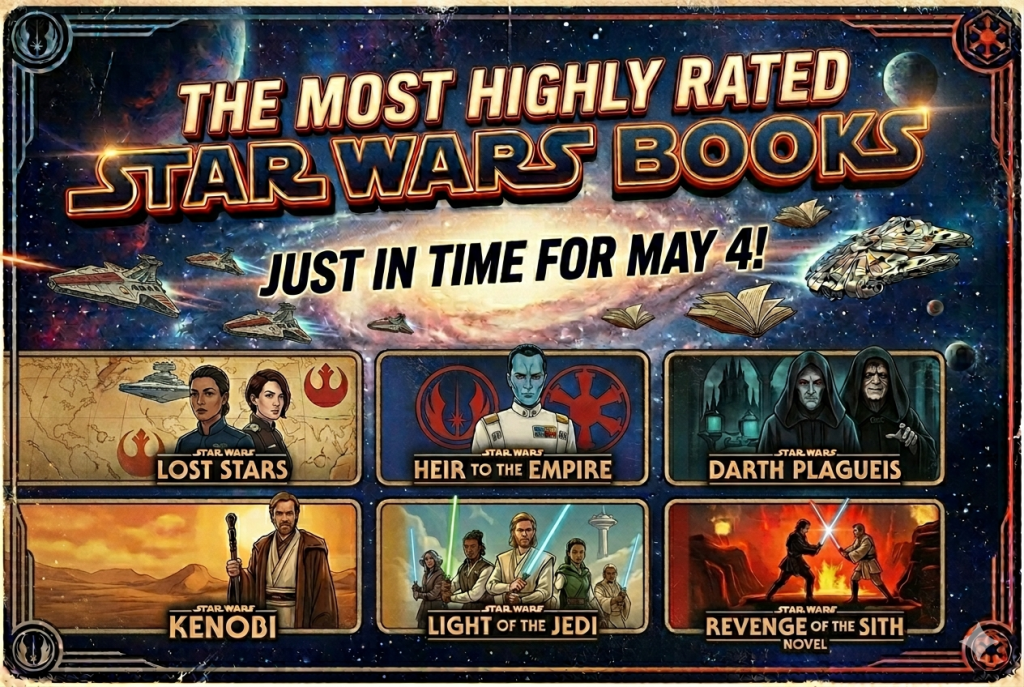
Selection Method
This guide focuses on highly rated Star Wars novels and major book editions that are widely recognized among readers, have strong Amazon customer ratings, and remain useful entry points into different parts of Star Wars publishing. Amazon ratings and review counts change over time, and ratings may differ by format, marketplace, and edition. For that reason, this article treats the ratings as a guide rather than a fixed ranking.
Quick Guide To The Featured Books
| Book | Author | Reader Appeal |
|---|---|---|
| Star Wars: Lost Stars | Claudia Gray | Best all-around modern Star Wars novel |
| Star Wars: Bloodline | Claudia Gray | Leia, politics, and the road to the sequel era |
| Darth Plagueis: Star Wars Legends | James Luceno | Sith history and Palpatine backstory |
| Path Of Destruction: Star Wars Legends | Drew Karpyshyn | Darth Bane and the Rule of Two |
| Star Wars: Dark Disciple | Christie Golden | Clone Wars-era Jedi and Asajj Ventress story |
| Thrawn | Timothy Zahn | Strategic military fiction centered on Thrawn |
| Master & Apprentice | Claudia Gray | Qui-Gon Jinn and Obi-Wan Kenobi |
| Star Wars: Episode III: Revenge Of The Sith | Matthew Stover | Literary adaptation of Anakin’s fall |
| Star Wars: Brotherhood | Mike Chen | Anakin and Obi-Wan between Episodes II and III |
| Star Wars: Shadow Of The Sith | Adam Christopher | Luke, Lando, and sequel-trilogy connective tissue |
| Catalyst: A Rogue One Novel | James Luceno | Death Star politics and Rogue One background |
| Lords Of The Sith | Paul S. Kemp | Vader, Palpatine, and Imperial survival drama |
Star Wars: Lost Stars
Claudia Gray’s Star Wars: Lost Stars is often treated as one of the best entry points into modern Star Wars publishing because it combines a personal character story with major events from the original trilogy era. The novel follows two young people whose lives move in opposite political directions as the Galactic Empire and the Rebel Alliance reshape the galaxy.
The book works well for readers who want a story that feels connected to the films without simply retelling them. Its strength is emotional continuity: battles, political changes, and iconic events are filtered through people whose loyalties are tested over time. For readers new to Star Wars novels, it offers a clear, self-contained story with enough familiar material to feel accessible.
Star Wars: Bloodline
Star Wars: Bloodline is another Claudia Gray novel with especially strong reader appeal. It is set before Star Wars: The Force Awakens and focuses on Leia Organa as a political figure navigating the tensions that later shape the sequel era.
The novel is useful for readers who want a better understanding of Leia’s public role after the fall of the Empire. It connects personal legacy, public trust, family history, and galactic political instability. Readers interested in the transition from the New Republic to the First Order will find it especially useful.
Darth Plagueis: Star Wars Legends
James Luceno’s Darth Plagueis: Star Wars Legends is one of the most frequently recommended Star Wars Legends novels. It focuses on Darth Plagueis, Palpatine, Sith strategy, and the long political groundwork behind the fall of the Republic. Penguin Random House identifies the book as a New York Times bestseller that chronicles Darth Plagueis and the origins of Palpatine’s rise.
This book is best suited for readers who want Sith lore, political manipulation, and a slower strategic view of galactic change. It is not part of the current Disney-era canon, but it remains highly influential in fan discussions because it offers a detailed account of Sith planning and Republic decay.
Path Of Destruction: Star Wars Legends
Drew Karpyshyn’s Path Of Destruction: Star Wars Legends is the first book in the Darth Bane trilogy and one of the strongest entry points into Old Republic-era Star Wars Legends storytelling. The book follows the rise of Darth Bane and explains the foundation of the Sith Rule of Two.
This novel is especially useful for readers who want a darker, Sith-centered story without needing to begin with the films. It provides a focused explanation of why the Sith reorganized around secrecy, patience, and master-apprentice succession.
Star Wars: Dark Disciple
Christie Golden’s Star Wars: Dark Disciple adapts unused story material developed for Star Wars: The Clone Wars. It centers on Quinlan Vos and Asajj Ventress during the Clone Wars, combining Jedi ethics, wartime pressure, and character drama.
The book is strongest for readers already interested in The Clone Wars television series. It gives Asajj Ventress a major literary spotlight and adds emotional depth to the Jedi Order’s late-war decisions.
Thrawn
Timothy Zahn’s Thrawn reintroduces Grand Admiral Thrawn within the modern Star Wars canon. The novel begins the modern canon Thrawn sequence written by Zahn.
This is the best starting point for readers who want military strategy, Imperial politics, and a character-driven look at one of Star Wars publishing’s most enduring antagonists. Unlike some villain-centered novels, Thrawn is less about raw power and more about observation, tactics, institutional navigation, and long-range calculation.
Master & Apprentice
Claudia Gray’s Master & Apprentice focuses on Qui-Gon Jinn and Obi-Wan Kenobi before Star Wars: Episode I: The Phantom Menace. Penguin Random House describes the novel as a story about an unexpected offer that threatens the bond between the two Jedi as they navigate danger and uncertainty.
The book is best for readers who want Jedi philosophy, master-apprentice tension, and a closer look at Qui-Gon’s unconventional relationship with the Jedi Council. It adds context to Obi-Wan’s early training and to the philosophical differences that shape the prequel era.
Star Wars: Episode III: Revenge Of The Sith
Matthew Stover’s novelization of Star Wars: Episode III: Revenge Of The Sith is widely regarded by readers as one of the strongest Star Wars film adaptations.
The book is valuable because it uses prose to explore the interior lives of Anakin Skywalker, Obi-Wan Kenobi, Padmé Amidala, and other major characters in ways the film format cannot fully cover. Readers interested in Anakin’s fall, Jedi institutional failure, and the emotional weight of the Clone Wars era will find this one of the most substantial Star Wars reading experiences.
Star Wars: Brotherhood
Mike Chen’s Star Wars: Brotherhood is set after Attack of the Clones and explores Anakin Skywalker and Obi-Wan Kenobi as their relationship shifts from formal apprenticeship toward wartime partnership.
This book is well suited to readers who want a canon story that bridges the emotional gap between Episodes II and III. It also supports readers who enjoyed the banter, conflict, and loyalty between Anakin and Obi-Wan in The Clone Wars.
Star Wars: Shadow Of The Sith
Adam Christopher’s Star Wars: Shadow Of The Sith brings Luke Skywalker and Lando Calrissian into a story set between Return of the Jedi and The Force Awakens. The book is positioned as a bridge between the original and sequel eras.
The novel is most useful for readers who want more context around sequel-trilogy backstory, including the search for hidden threats after the Empire’s fall. It gives Lando a major emotional role and provides additional connective tissue for readers interested in the larger Skywalker saga timeline.
Catalyst: A Rogue One Novel
James Luceno’s Catalyst: A Rogue One Novel is the major prose prequel to Rogue One: A Star Wars Story. It focuses on Galen Erso, Orson Krennic, the Death Star, and the mixture of scientific ambition and Imperial coercion behind the superweapon.
This book works best for readers who enjoy the political and industrial side of Star Wars. It gives more weight to the events of Rogue One by showing how personal relationships, weapons development, and Imperial bureaucracy converged before the film begins.
Lords Of The Sith
Paul S. Kemp’s Lords Of The Sith places Darth Vader and Emperor Palpatine in a survival-focused story that emphasizes their dangerous partnership.
The book is best for readers who want a compact Imperial-era story built around action, menace, and Sith power dynamics. It also provides a closer look at the way Vader and Palpatine function together when isolated from the machinery of the Empire.
Best Starting Points By Reader Type
Readers new to Star Wars books should usually begin with Star Wars: Lost Stars, because it combines accessibility, strong character work, and direct connections to familiar film events.
Readers interested in Leia and the sequel era should begin with Star Wars: Bloodline, followed by Star Wars: Shadow Of The Sith.
Readers interested in Sith history should begin with Darth Plagueis: Star Wars Legends, then continue with Path Of Destruction: Star Wars Legends.
Readers interested in Jedi relationships should begin with Master & Apprentice, then continue with Star Wars: Brotherhood and Star Wars: Dark Disciple.
Readers interested in military strategy and Imperial politics should begin with Thrawn, then move to Catalyst: A Rogue One Novel.