As an Amazon Associate we earn from qualifying purchases.
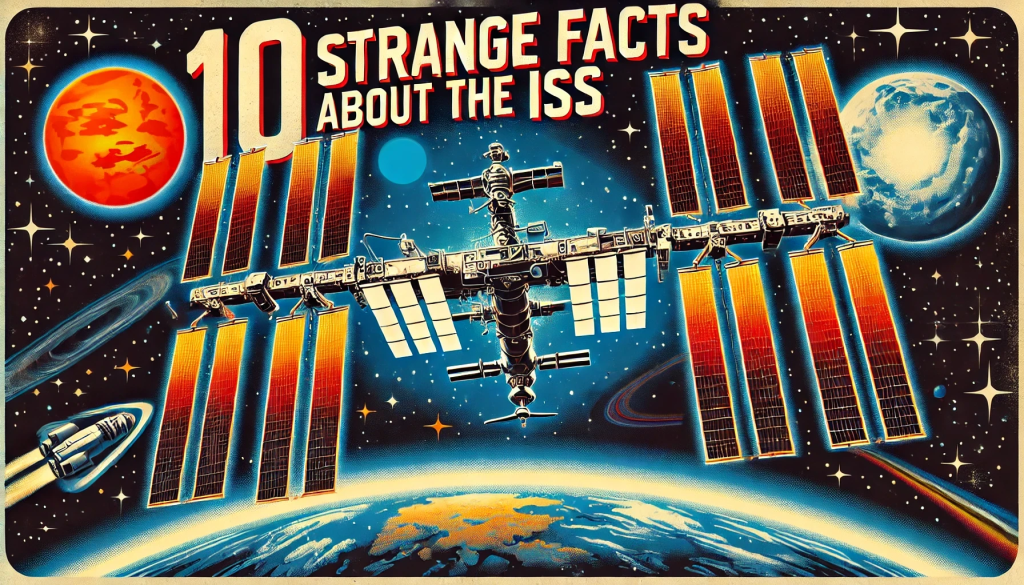
The International Space Station (ISS) has been orbiting Earth for more than two decades, serving as a hub for scientific research, international cooperation, and technological advancements. While its contributions to space exploration are well known, there are lesser-known aspects that make this orbiting laboratory even more intriguing. From peculiar living conditions to unusual features, the ISS is full of surprises.
It Is the Most Expensive Structure Ever Built
Constructing and maintaining the International Space Station has required an enormous financial investment, making it the most expensive structure ever built. The total cost is estimated to exceed $150 billion, including expenses related to research, construction, and ongoing operations.
The high cost results from the complexity of assembling a modular spacecraft in orbit, along with the expense of launching components aboard multiple missions. Governments, space agencies, and private contractors have contributed to the station’s funding. Given its scientific contributions and technological innovations, the cost is often justified in terms of its benefits to humanity.
It Travels at an Incredible Speed
The ISS orbits Earth at a speed of approximately 28,000 kilometers per hour (about 17,500 miles per hour). This rapid movement means the station completes an orbit around Earth roughly every 90 minutes.
As a result, astronauts aboard the ISS experience 16 sunrises and 16 sunsets every 24-hour period. The rapid orbital period has implications for daily routines, as crew members must adhere to a carefully maintained schedule to balance sleep, work, and exercise.
Astronauts Grow Taller in Space
While living in microgravity, astronauts experience physiological changes, one of which is a temporary increase in height. The lack of gravitational compression on the vertebrae allows the spine to extend, resulting in astronauts growing up to five centimeters (two inches) taller during their missions.
This effect reverses once they return to Earth’s gravity, and within a few days, their height returns to normal. Although this phenomenon is harmless, it does pose a challenge when designing space suits and spacecraft interiors, requiring adjustable equipment to accommodate potential height differences.
The ISS Has Hosted a Pizza Delivery
Despite being located in low Earth orbit, the space station has received a delivered pizza. In 2001, members of the station’s crew enjoyed a pizza from Pizza Hut, which was specially prepared to withstand space travel. The company reportedly paid around million for the publicity stunt.
Due to restrictions in microgravity, the pizza had to be slightly altered—it was made with a thicker crust to prevent crumbling, and traditional ingredients, such as fresh vegetables, were omitted to ensure longevity. Although a novel experience, astronauts typically rely on pre-packaged meals designed for long-duration spaceflight.
The First Space-Grown Greens
Growing plants in space has been an important experiment aboard the ISS, and in 2015, astronauts consumed lettuce that had been grown in orbit. The red romaine lettuce was cultivated in the station’s plant growth facility, known as Veggie.
Prior to human consumption, scientists conducted extensive testing to ensure the safety of space-grown plants. The successful harvest demonstrated that astronauts could potentially grow their own food on long-duration space missions. The experiment provided useful insights into how plants develop in microgravity and how they could help sustain future deep-space exploration efforts.
The Station Constantly Leaks Air
Even though the ISS is built with sturdy materials and equipped with advanced life-support systems, it is not completely airtight. The station experiences tiny pressure leaks over time, which must be closely monitored and addressed by both astronauts and ground crews.
Most leaks occur due to natural material degradation and small impacts from space debris. To prevent serious problems, astronauts regularly inspect the station’s structure and seal any minor breaches. The steady loss of air is factored into design considerations, ensuring that essential supplies such as oxygen reserves remain sufficient.
Strange Sounds Are Heard on the ISS
Despite being in the vacuum of space, the interior of the station is far from quiet. Astronauts report hearing a variety of sounds, including humming, clicking, and whirring. These noises primarily originate from the station’s ventilation systems, pumps, and onboard equipment.
However, some astronauts have described unexplained sounds, which have sparked curiosity. While most are likely attributed to mechanical functions, the environment can sometimes cause unusual auditory perceptions. Earplugs and noise-canceling headsets are commonly used by crew members who need rest in the otherwise noisy confines of the station.
Fire Burns Differently in Space
Fire behaves in an unusual manner aboard the ISS due to the absence of traditional buoyancy-driven convection currents. On Earth, hot air rises, causing flames to stretch upward. In microgravity, flames form spherical shapes instead.
Experiments conducted on the ISS have shown that fire burns at lower temperatures and in unexpected ways, sometimes continuing to smolder even after the visible flames are extinguished. These findings have important implications for fire safety protocols in space and also contribute to scientific research on combustion.
There Is a Recycled Urine System
Water is a valuable resource aboard the ISS, and to conserve supplies, the station employs an advanced recycling system that converts urine and sweat into drinkable water. This process significantly reduces the need for regular resupply missions.
The system utilizes filtration and purification technologies to transform waste liquids into clean water that meets drinking standards. While the concept may seem unappealing, it ensures the sustainability of long-duration missions and provides valuable data for future missions to the Moon and Mars, where water resources will be limited.
It Is Visible to the Naked Eye
Despite being located more than 400 kilometers (about 250 miles) above Earth, the ISS is often visible to the naked eye as it orbits. It appears as a bright, fast-moving object crossing the night sky.
Because it reflects sunlight, the station is most visible during early morning or evening hours when the sky is dark enough to provide contrast. Space agencies provide tracking information that allows enthusiasts to predict when and where they can observe the station from their location.
Today’s 10 Most Popular Science Fiction Books
[amazon bestseller=”science fiction books” items=”10″]