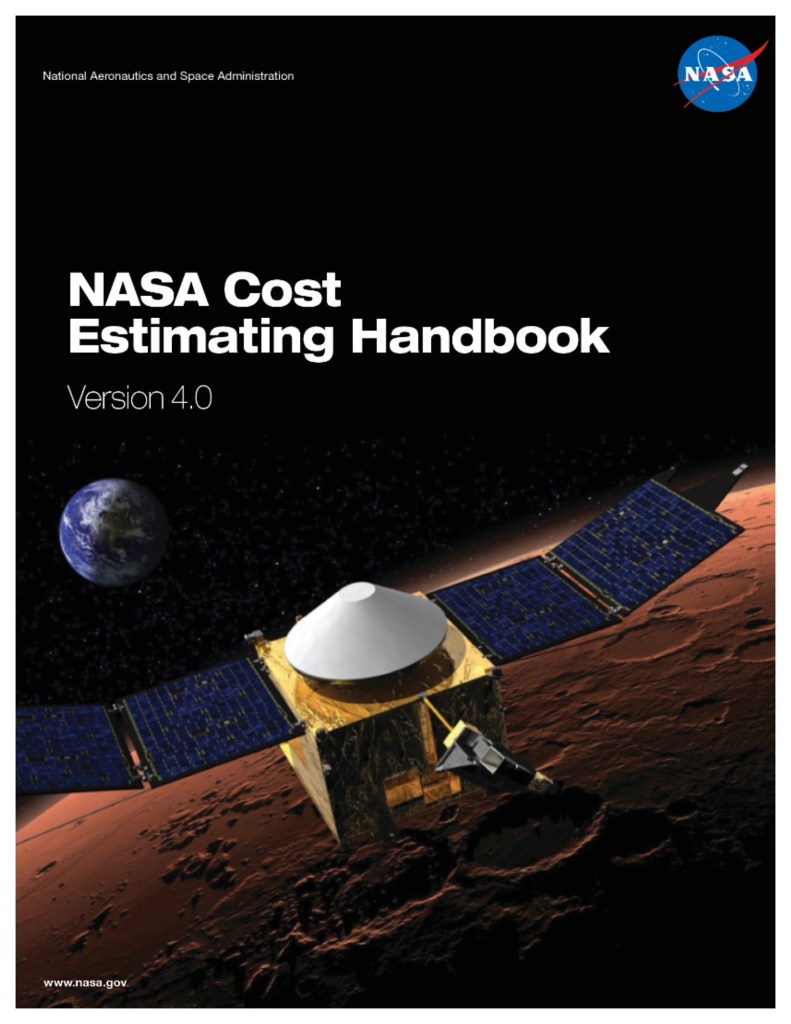
The NASA Cost Estimating Handbook (CEH) Version 4.0 is a comprehensive guide developed to assist cost estimators and analysts in effectively managing and estimating costs for various NASA projects. The handbook is designed to cater to a diverse audience, including non-estimating professionals, new cost estimators, and experienced analysts. This latest version incorporates significant policy changes and serves as a reference for best practices in cost estimating at NASA.
The handbook’s content reflects the complex nature of NASA’s mission requirements, emphasizing the need for precise and adaptable cost estimating processes. With resources becoming increasingly scarce and the costs of space systems rising, informed decision-making has become essential. This handbook’s objective is to equip NASA’s cost estimating community with the tools and knowledge necessary to support critical decisions throughout a project’s life cycle.
The Need for Cost Estimating and Cost Analyses
Cost estimates and analyses are vital to NASA and external organizations alike. They play a crucial role in various stages of project management, from formulation and implementation to the selection of proposals and the approval of life-cycle phases. Accurate cost estimates are necessary for making informed decisions, whether for internal use, such as project office formulation or economic analyses, or for external stakeholders, including Congress, the Office of Management and Budget (OMB), auditors, and taxpayers.
Cost estimating is not just about determining the financial resources required for a project; it also involves understanding the risks, uncertainties, and potential alternatives. By providing detailed cost analyses, NASA can make better resource allocation decisions, manage project risks, and control costs more effectively. The process must be flexible enough to adapt to the specific needs of different projects while adhering to the core principles of cost estimating.
NASA’s Acquisition and Management Processes
The NASA acquisition process is designed to ensure that projects meet their programmatic, institutional, technical, cost, schedule, and performance commitments. The acquisition policy is outlined in NASA Policy Directive (NPD) 1000.5, which provides a framework for funding space missions. This directive is supported by NASA Procedural Requirements (NPR) documents, such as NPR 7120.5E, which detail the management of space flight programs throughout their life cycles.
The CEH is primarily focused on cost estimates for flight projects, but the principles it outlines are also applicable to other types of programs, including information technology, technology development, and construction of facilities. The Project Life Cycle Milestone Chart, an essential tool within this process, helps identify when cost estimates are needed to support the justification, formulation, approval, and implementation of a project.
As a project progresses through its life cycle, the uncertainties related to schedule and cost typically decrease, which requires the cost estimator to continuously refine their estimates. Understanding these dynamics is crucial for ensuring that cost estimates are accurate and reliable throughout the project’s development.
The Cost Estimating Process
The CEH details a 12-step cost estimating process, divided into three main parts: Project Definition, Cost Methodology, and Cost Estimate. This process is consistent with previous NASA handbooks and aligns with the Government Accountability Office’s (GAO) cost estimating process, though it has been tailored to fit NASA’s unique needs.
1. Project Definition Tasks
The first part of the process involves defining and understanding the project to be estimated. This includes receiving the customer’s request, building or obtaining a Work Breakdown Structure (WBS), and defining or obtaining the project’s technical description. These tasks lay the foundation for the cost estimate, ensuring that all relevant factors are considered.
2. Cost Methodology Tasks
The second part focuses on selecting and applying the appropriate cost estimating methodology. This involves developing ground rules and assumptions, selecting the cost estimating methodology, building or selecting a cost model or tool, and gathering and normalizing data. Each of these tasks is critical for ensuring that the cost estimate is accurate, comprehensive, and defensible.
3. Cost Estimate Tasks
The final part of the process involves developing the cost estimate itself, incorporating cost risk assessments, documenting the estimate, presenting the results, and updating the estimate as required. These tasks ensure that the cost estimate is not only accurate but also clearly communicated and well-documented, making it easier to justify and defend.
Joint Cost and Schedule Confidence Level (JCL) Analysis
One of the significant additions to CEH Version 4.0 is the inclusion of an Appendix J dedicated to Joint Cost and Schedule Confidence Level (JCL) analysis. JCL analysis is a critical tool for managing the risks associated with cost and schedule estimates. It involves a probabilistic assessment that combines cost and schedule risks to provide a comprehensive view of a project’s likelihood of meeting its objectives within the allocated budget and timeline.
The JCL process begins by identifying the goals of the analysis, developing a summary analysis schedule, loading costs onto schedule activities, incorporating a risk list, conducting uncertainty analysis, and finally calculating and reviewing the results. This process helps decision-makers understand the confidence levels associated with their project’s cost and schedule estimates, enabling more informed decision-making.
Analyses for Decision Support
In addition to JCL analysis, the handbook covers several other types of analyses that are crucial for supporting decision-making in NASA projects. These include sensitivity analysis, trade studies, affordability analysis, cost as an independent variable (CAIV), and economic analysis.
Sensitivity Analysis
Sensitivity analysis involves testing how changes in key variables affect the overall cost estimate. This type of analysis is useful for identifying which factors have the most significant impact on costs and for assessing the robustness of the cost estimate.
Trade Studies
Trade studies involve evaluating different alternatives to determine which option offers the best balance between cost, performance, and risk. These studies are particularly important in the early stages of project development when key decisions about design and implementation are being made.
Affordability Analysis
Affordability analysis assesses whether a project’s estimated costs align with the available budget and funding constraints. This analysis helps NASA ensure that projects are financially viable and sustainable over the long term.
Cost as an Independent Variable (CAIV)
CAIV is a management strategy that treats cost as a key design variable, alongside performance and schedule. By focusing on cost early in the project’s development, NASA can make informed decisions that balance cost with other project objectives.
Economic Analysis
Economic analysis involves evaluating the costs and benefits of a project over its entire life cycle. This type of analysis is particularly useful for comparing different project alternatives and for assessing the long-term value of a project.
Appendices and Additional Resources
The handbook includes a comprehensive set of appendices that provide additional detail on various aspects of the cost estimating process. These appendices cover topics such as cost analysis data requirements (CADRe), work breakdown structures, cost estimating methodologies, models and tools, cost risk and uncertainty methodologies, and more.
For example, Appendix A provides an overview of the CADRe and One NASA Cost Engineering (ONCE) database, which are essential resources for collecting and analyzing cost data. Appendix B covers the development and use of work breakdown structures, while Appendix C delves into the details of different cost estimating methodologies, such as analogy, parametric, and engineering build-up methods.
The appendices also include practical guidance on documenting and presenting cost estimates, using performance information to adjust estimates, and estimating the costs of technology development, construction of facilities, and software.
Summary
The NASA Cost Estimating Handbook Version 4.0 is an essential resource for anyone involved in cost estimating at NASA. It provides a detailed, step-by-step guide to the cost estimating process, incorporating the latest best practices and policy updates. By following the guidelines outlined in this handbook, cost estimators and analysts can develop accurate, reliable, and defensible cost estimates that support informed decision-making throughout a project’s life cycle.
This handbook not only serves as a practical tool for current projects but also contributes to the ongoing improvement of cost estimating practices at NASA. By continuously refining and updating the CEH, NASA ensures that its cost estimating community remains equipped to meet the challenges of future space missions.